Home » Engagement & Wedding Rings » Diamonds
Our Complete Guide to Elongated Diamond Shapes
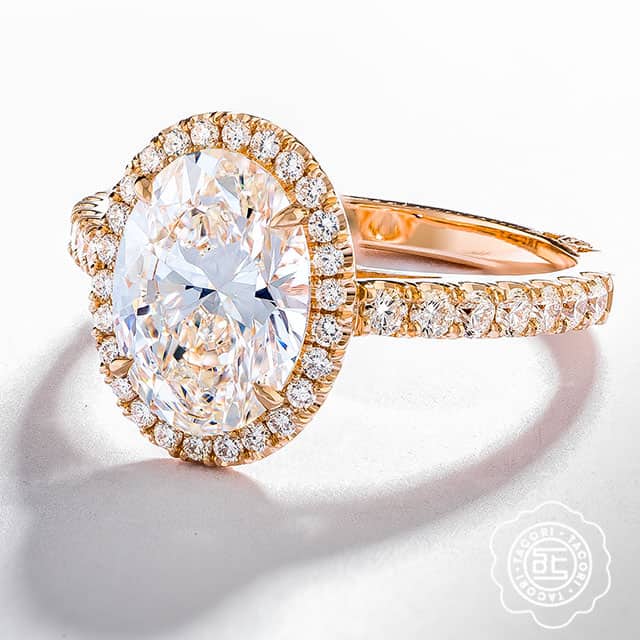


Elongated is a proportion, not a shape name. An elongated diamond is noticeably longer than it is wide, and several familiar shapes come that way: oval, marquise, pear, emerald, radiant, and the elongated cushion.
Travis Kelce chose an elongated cushion for Taylor Swift’s engagement ring, and we broke that stone down in our guide to the old mine elongated cushion cut and its bezel setting. And National Jeweler noted that emerald, marquise, and the elongated cushion cut led shape growth over the past year. Our guide to fancy shape diamonds covers the wider family these belong to, from princess and emerald through oval, marquise, pear, and radiant, and if you are shopping as a couple, our tips for ring shopping together cover the game plan and the budget conversation before you go.
Key Takeaways
- Elongated describes proportion, and the threshold is different for every shape. A cushion is elongated past a 1.2 length-to-width ratio; an oval at 1.2 still looks round, and GIA does not call one long until about 1.41.
- Brilliant-faceted elongated cuts show a bow-tie: a dark band across the center of the stone. Product photography hides it. Daylight does not.
- The ends of the stone decide the setting, because a point chips more easily than a curve.
What Makes a Diamond Shape Elongated
01
LENGTH TO WIDTH RATIO
Divide the stone’s length by its width. GIA reads an oval at 1.30 to 1.40 as gently elongated and 1.41 to 1.50 as a long oval, while a cushion only turns elongated past 1.2. Ask for the ratio, not just the shape.
02
FACE-UP SPREAD
Stretching a stone carries the same carat weight across a wider face. That is why two diamonds of identical weight can look like different sizes once they are on a hand.
03
THE ENDS
A point, a curve, or a clipped corner. The ends drive the setting a stone needs and how a wedding band sits against it.
Oval, Marquise, and Pear: The Curved-Sided Elongated Cuts
Each of these is cut in the brilliant style, so they return light the way a round diamond does, and their sides curve even where the ends come to a point. The oval has no corners and no points. The marquise comes to a point at both ends. The pear takes one of each. The ratios that flatter them differ: GIA reads an oval at 1.30 to 1.40 as gently elongated and 1.41 to 1.50 as a longer, more dramatic stone, says many experts prefer a pear around 1.50 to 1.75, and reports that marquise diamonds submitted to its laboratory typically range from 1.6:1 to 2.2:1.
They can also carry a bow-tie. GIA’s oval buying guide describes the cause: the dark band appears when part of the light reaching the stone is blocked, specifically by your own head and shoulders, as you look at it. Some degree of it is always present in an oval, and GIA notes that marquise diamonds without one usually lack brightness and tend to be dull. The question is whether it stays faint enough that you stop noticing it.
An oval, a marquise, and a pear from our collection, each with a natural diamond center:

14k White Gold Solitaire Engagement Ring Natural Oval Diamond Center 1/2 Ct. Tw.
- Oval center diamond, natural, included with the ring
- 14k white gold solitaire setting
- 1/2 ct. tw. in total, center stone included

14k Yellow Gold and 14k White Gold Solitaire Engagement Ring Natural Marquise Diamond Center 1 Ct. Tw.
- Marquise center diamond, natural, included with the ring
- Two-tone 14k yellow gold and 14k white gold solitaire setting
- 1 ct. tw. in total, center stone included

Poem 14k White Gold Natural Diamond Engagement Ring 1 1/3 ct. tw.
- Pear shaped center diamond, natural, included with the ring
- 14k white gold from our Poem collection
- 1 1/3 ct. tw. in total, center stone included
Browse oval, marquise, and pear engagement rings to compare them yourself, or go deeper on one shape with our guides to oval diamond engagement rings, marquise cut diamonds, and pear-shaped rings and the bands that pair with them.
Elongated Cushion, Emerald, and Radiant: The Straight-Sided Elongated Cuts
Square off the ends and the character of the stone changes. The emerald cut is a step cut, with long parallel facets and an open table that produce broad flashes of light rather than fire, so it rewards a clean stone. The radiant applies brilliant faceting to that same trimmed rectangular outline, which gives it sparkle an emerald cut does not chase. The elongated cushion sits between them, corners rounded rather than clipped.
A cushion at 1.0 to 1.05 is square, at 1.1 to 1.2 only slightly rectangular, and past 1.2 elongated. Our breakdown of Taylor Swift’s old mine elongated cushion cut and bezel setting works through those thresholds side by side against ovals and radiants, and covers what makes an old mine cut an antique rather than a style.
An elongated cushion and a radiant, both lab-grown, with a natural emerald cut between them:

Eternalle 14k Yellow Gold Lab-Grown Diamond Engagement Ring 5 1/4 ct. tw.
- Elongated cushion cut center diamond, included with the ring
- 14k yellow gold from our Eternalle lab-grown collection
- 5 1/4 ct. tw. in total, center stone included

14k Yellow Gold and 14k White Gold Solitaire Engagement Ring Natural Emerald Cut Diamond Center 1 Ct. Tw.
- Emerald cut center diamond, natural, included with the ring
- Two-tone 14k yellow gold and 14k white gold solitaire setting
- 1 ct. tw. in total, center stone included

Eternalle Platinum Lab-Grown Diamond Engagement Ring 2 ct. tw.
- Radiant cut center diamond, included with the ring
- Platinum from our Eternalle lab-grown collection
- 2 ct. tw. in total, center stone included
Compare our cushion cut, emerald cut, and radiant cut engagement rings. Our guide to cushion cut diamond engagement rings puts the elongated cushion directly against the emerald cut, and we have full guides to emerald cut diamonds and radiant cut diamonds.
Do Elongated Diamonds Look Bigger Than Round Diamonds?
Face-up, yes. GIA says an oval’s elongated shape offers a larger surface area than a round diamond of the same carat weight. Carat measures weight rather than size, so a stretched outline spends the same weight across more visible surface.
That spread is not free. Weight showing on the surface is weight that is not in the pavilion, and a stone cut too shallow or too deep to chase face-up size pays for it in brightness. GIA notes that a bow-tie is especially common in diamonds with either shallow or very deep pavilions, and it calls ovals above a 1.50 ratio rarely seen, because they are impractical to cut from the rough. A well-cut elongated diamond looks larger than a round of the same weight and stays bright. A poorly cut one manages only the first.
How Do You Choose an Elongated Diamond?
Work from the outline inward, and expect to decide the ratio before you decide anything else.
- Decide how long you want it to look. Ask to see one shape at two ratios side by side. A 1.30 oval and a 1.50 oval are the same shape and look completely different on a hand.
- Hunt for the bow-tie in daylight. Turn the stone, tilt it, and move your head. A faint band that shifts as you move is normal. A fixed dark stripe across the middle is the one to walk away from.
- Match the setting to the ends. GIA names the points as the vulnerable areas on the marquise and the pear, and recommends a V-prong over the point or a bezel around the whole stone. Our guide to bezel settings for engagement rings walks through the full bezel, the partial bezel, and the bezel-look.
- Bring the wedding band in early. A pointed end and a straight band compete for the same space, which is why contoured bands exist. Try them on together before deciding.
- Choose natural or lab-grown on your own terms. We carry both in elongated shapes, and we do not steer the decision. Read up on natural diamonds and on lab-grown diamonds, or start with the 4Cs.
The Robbins Brothers Difference
As we said in an interview with Inquisitor, “Our role is to educate, support, and help each couple choose the diamond that aligns with their vision and feels right for them.”
Only 1 in 10 of the world’s most beautiful & radiant diamonds makes the cut. Our VIP diamond viewing rooms exist so you can put an oval next to a marquise under proper light and watch which one your eye keeps going back to.
We have been guiding couples through this since 1921 and our master jeweler works in house for custom settings and resetting work. Our lab-grown diamonds pass the same selection criteria as our natural diamonds, and both carry our Lifetime Diamond, Sapphire, and Ruby Limited Warranty. Additionally, natural diamonds qualify for our 110% Natural Diamond Trade-Up Guarantee. Full terms: Lifetime Diamond, Sapphire, and Ruby Limited Warranty & 110% Natural Diamond Trade-up Guarantee, excludes lab-grown, click here for full details.
Frequently Asked Questions
What is an elongated diamond shape called?
There is no single name, because elongated describes the proportion rather than the cut. You name the shape and add the proportion: an elongated cushion, an elongated radiant, or simply an oval, a marquise, or a pear. Ovals, marquises, and pears have no compact version, so they are elongated by definition. See the range in our elongated engagement rings.
What does an elongated cushion cut mean?
An elongated cushion cut is a cushion cut whose length-to-width ratio runs over 1.2, giving it a rectangular outline with softly rounded corners instead of a square one. Our guide to the old mine elongated cushion cut and bezel settings works through the ratios with side-by-side comparisons against ovals and radiant cuts.
What cut is Taylor Swift’s diamond?
Taylor Swift’s engagement ring centers an old mine elongated cushion cut diamond in a hand-engraved yellow gold bezel-look setting with four prongs and small sidestones. Old mine cuts were cut by hand before modern cutting technology, so every true one is both natural and antique. Our full breakdown of Taylor Swift’s engagement ring covers the diamond, the setting, and how to get the look.
Are elongated diamonds more expensive?
Not for being elongated. Price tracks the 4Cs, and shape affects it mainly through how much of the original rough stone survives the cut. A round brilliant removes more rough than a fancy shape does, so elongated shapes tend to offer more diamond for a given budget.
Is there an elongated oval diamond?
Yes, in the sense that ovals come at a range of ratios. GIA reads 1.20 to 1.29 as shorter and rounder, 1.30 to 1.40 as gently elongated, and 1.41 to 1.50 as a longer, more dramatic stone. Past 1.50 it calls them rarely seen, because they are impractical to cut from the rough, so the long-oval look in practice lives between 1.41 and 1.50. Compare a few in our oval engagement rings.
How much does an elongated cushion cut engagement ring cost?
That depends far more on the carat weight, color, clarity, and cut of the center stone than on the shape. Our guide to how much an engagement ring should cost breaks down how each choice moves the budget, and our jewelry consultants can show you what a given budget buys in this shape.
Which elongated diamond shapes does Robbins Brothers carry?
We carry elongated shapes across the bridal collection: oval, marquise, and pear on the curved-sided side, and elongated cushion, emerald, and radiant on the straight-sided side, in natural and lab-grown. Some are complete rings with the center stone included; some are settings you pair with a diamond you choose separately. Start with our elongated engagement rings.
Can I see elongated diamond shapes in person before buying?
We recommend it, because a bow-tie and the true proportions of a stone are hard to judge on a screen. Walk-ins are welcome at our showrooms across California, Arizona, Texas, and Washington, and you can book an appointment for time in one of our VIP diamond viewing rooms.
Or find a Robbins Brothers near you to compare elongated diamond shapes in person.
Recommended
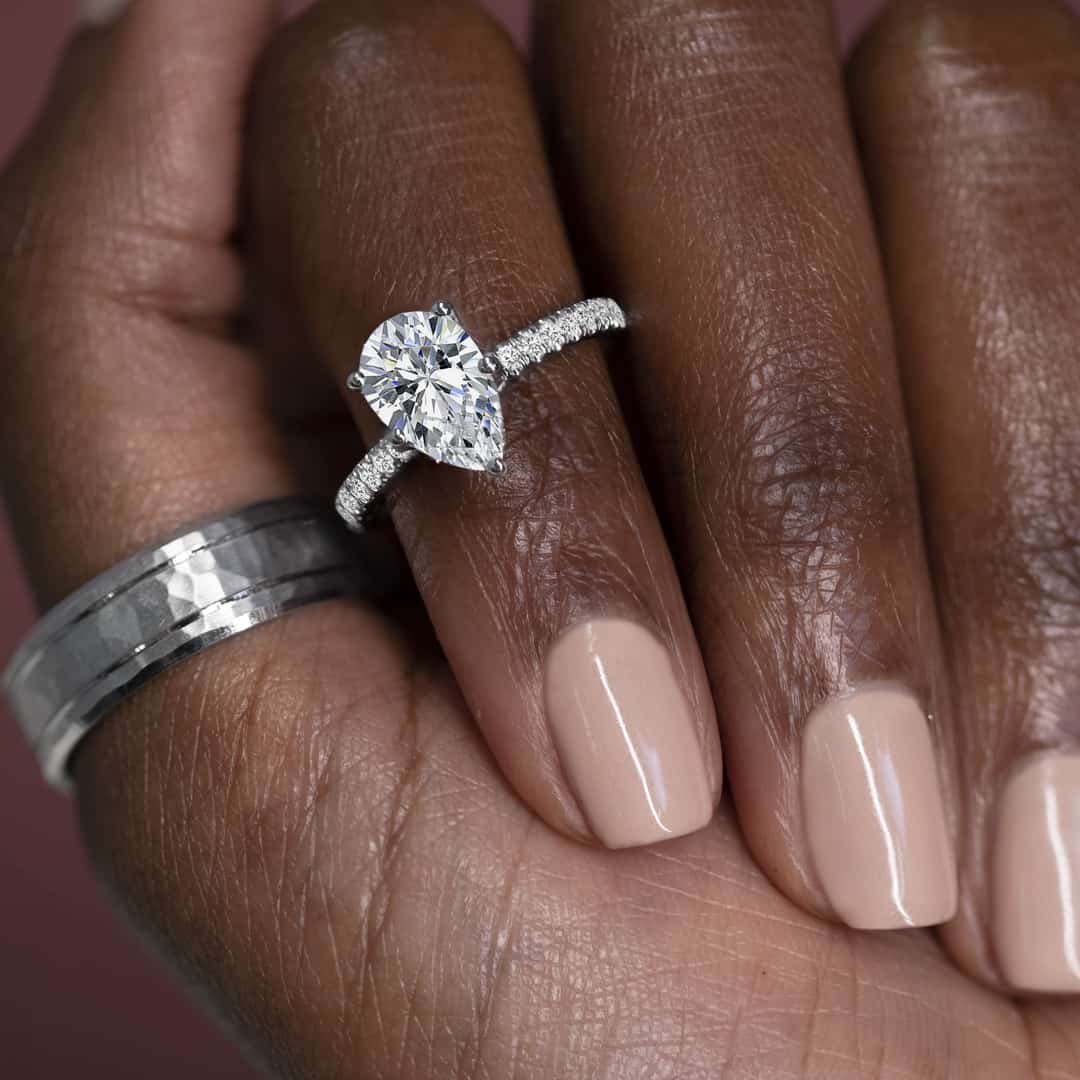
Pear-Shaped Diamond Engagement Rings with Wedding Bands
Pear-cut diamonds are elegant and elongating and work well in any engagement ring setting.
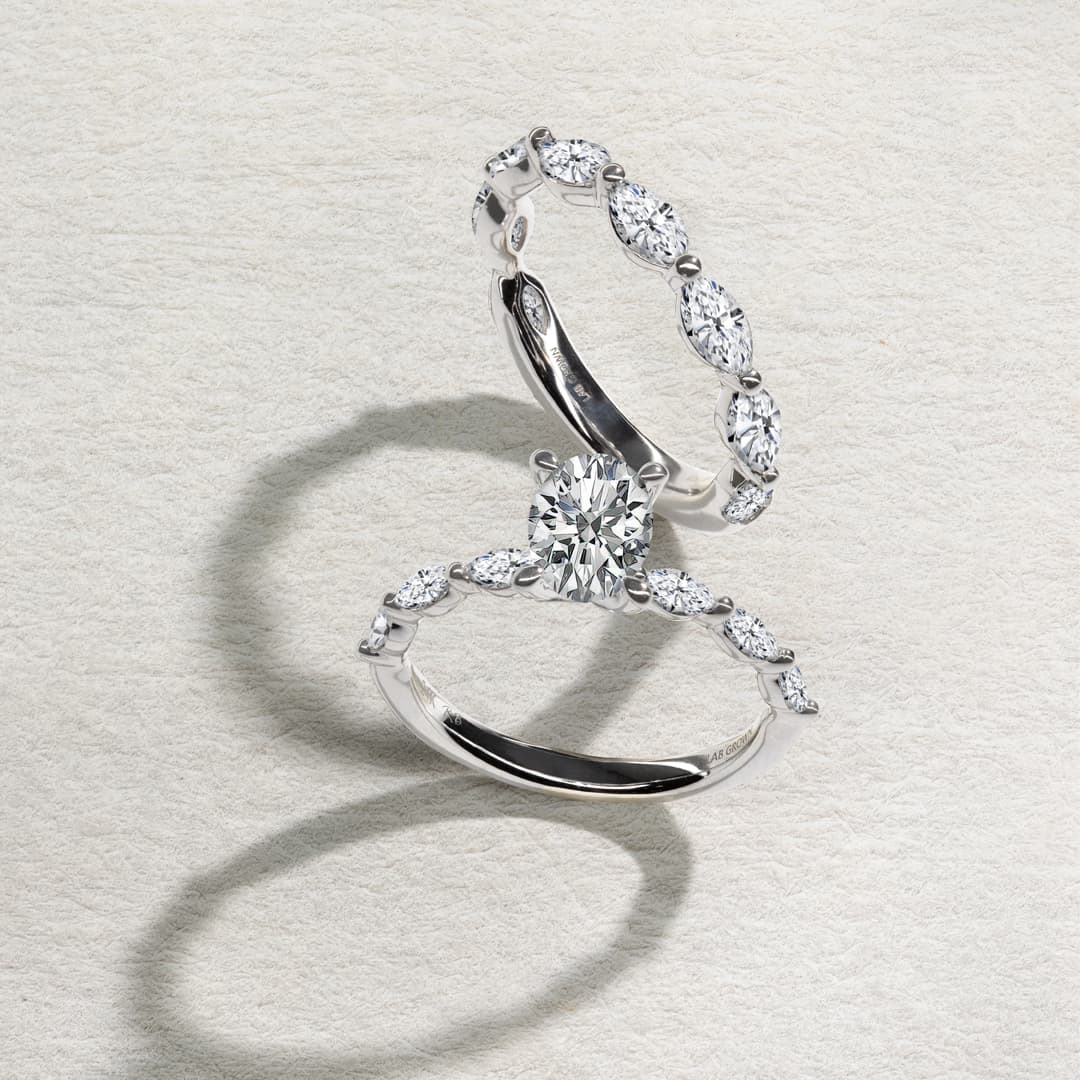
Your Guide to Marquise Cut Diamond Engagement Rings and Wedding Bands
A marquise is an elongated brilliant cut with two pointed ends and softly curved sides, and it is one of…
read more
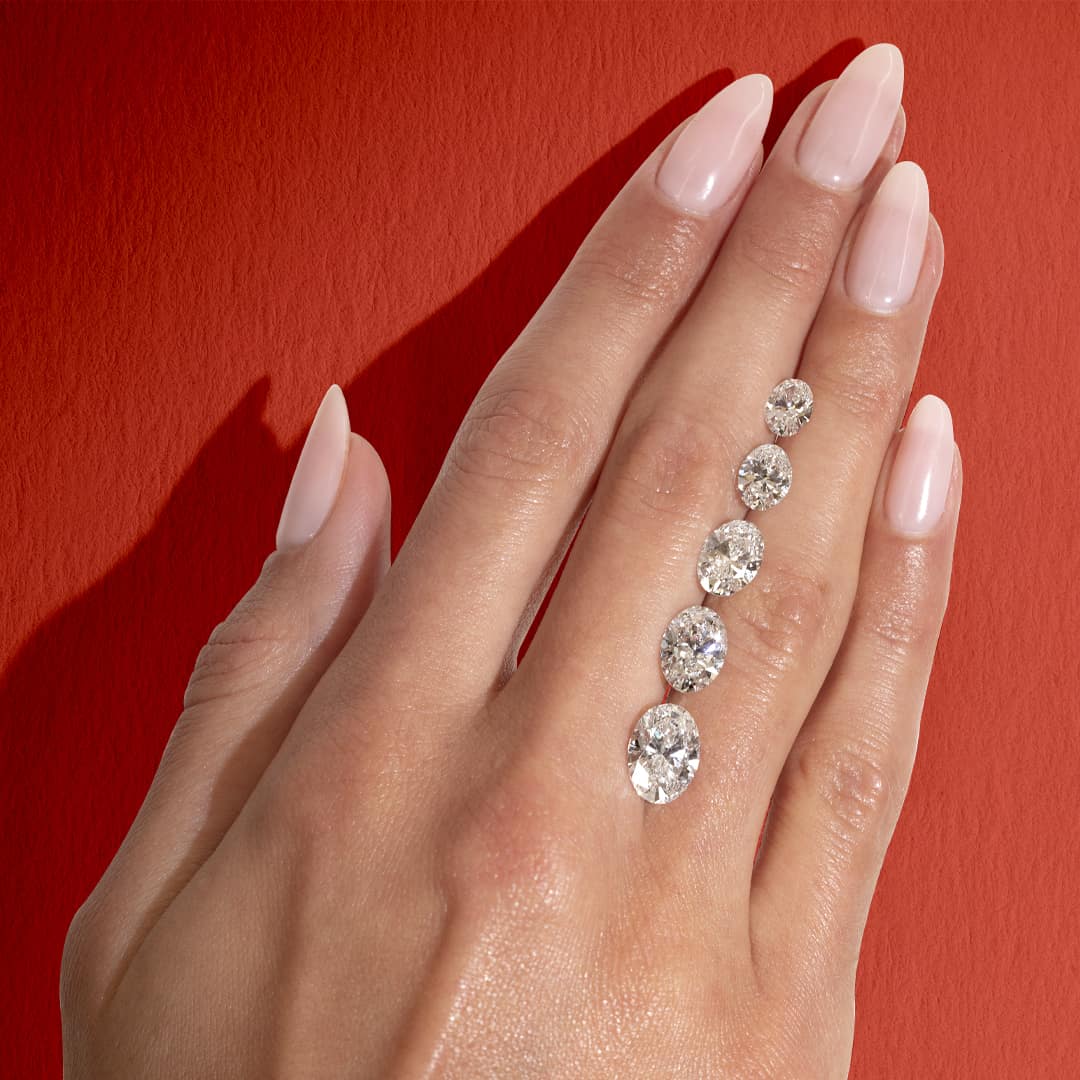
The Most Popular Diamond Shapes for Engagement Rings
The perfect diamond shape for your engagement ring is the one you love and that best complements your setting. If…
read more