Styling Art Deco-Inspired Jewelry
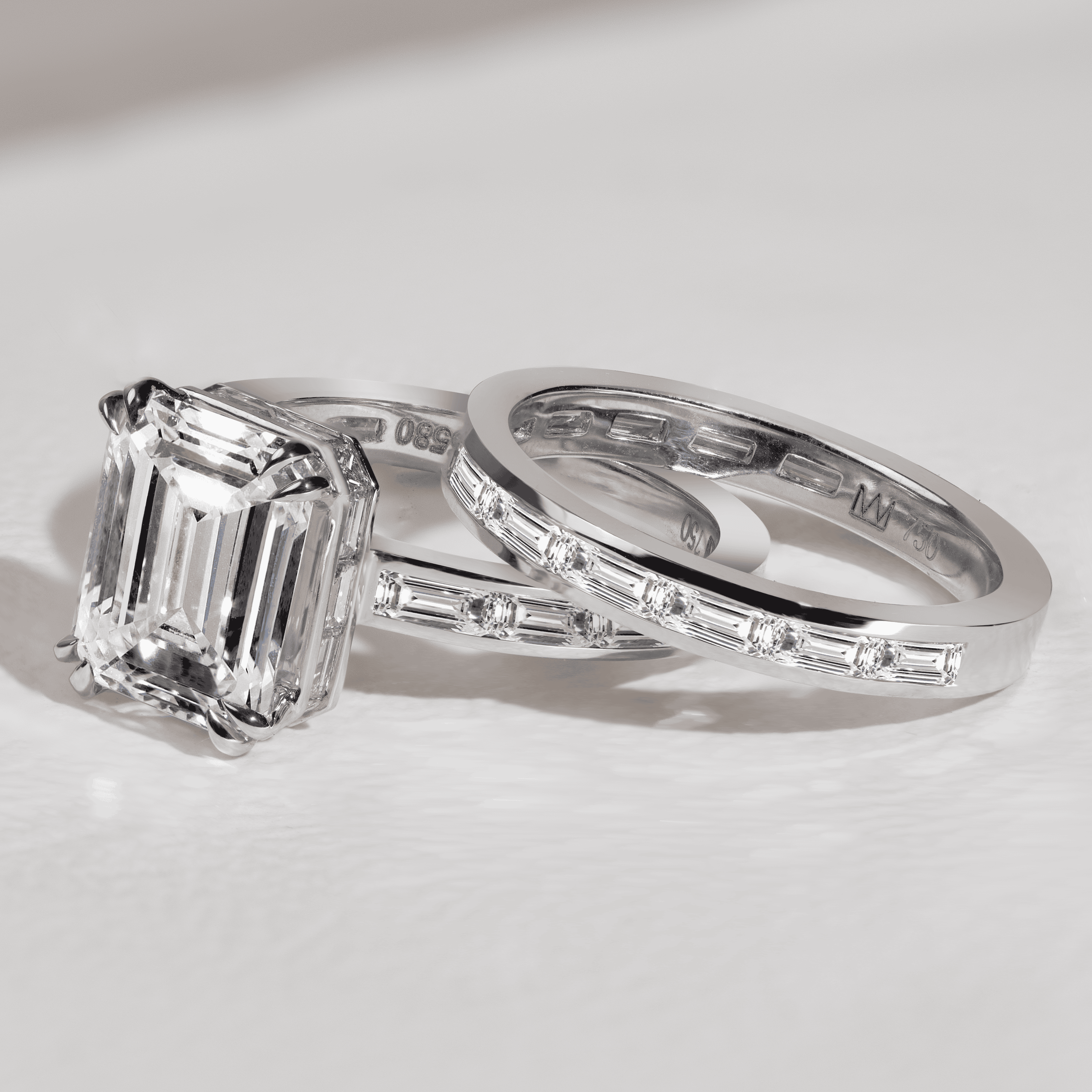


Art Deco inspired jewelry is geometric, bold, and architectural. Its resurgence reinterprets those 1920s hallmarks through a modern lens, pairing clean symmetry with the finishes we love today. Here is how to understand the latest Art Deco jewelry trends and fold these striking looks into your personal style.
Art Deco emerged in the 1920s and 1930s as a celebration of the modern age. The style evolved from the flowing lines of Art Nouveau and embraced geometric shapes, symmetry, and boldness. When King Tutankhamun’s tomb was discovered in 1922, it captured the world’s imagination, and designers began weaving in motifs such as lotus blossoms and pyramids.
Foundational Art Deco design leans on straight lines, right angles, zigzags, and repetition. You will also see high-contrast color pairings, sweeping nature motifs like sunbursts and palm fronds, and stepped forms that nod to the skyscrapers of the era. In fine jewelry, that translates to emerald cut and marquise diamonds, bright colored gemstones, and cool white gold and platinum metals.
Art Deco Jewelry Styling Tips
Art Deco pieces are made to be noticed, so a little restraint goes a long way. Statement chandelier earrings, angular pendants, sculptural bracelets, and bold cocktail rings all shine when you build the rest of the look around them. Explore more across our fine jewelry collection.
- Mix a bold Art Deco piece with minimalist jewelry so the statement piece keeps the spotlight.
- Pair angular pendants with V-necks or plunging necklines to echo the geometry.
- Style high-contrast pieces with monochrome outfits, like black and white or a single-color look.
- Bring out large statement pieces such as cocktail rings and hoop earrings with evening wear for a wow moment.
- At the office, pair Art Deco jewelry with crisp tailoring and clean lines, like a pressed white button-down or a single-color shirt dress.
Statement pieces to build around
Milgrain edging is the detail to look for when you are shopping the modern interpretation, and it is easy to miss at a glance. It shows up on the bangle below and again on the platinum setting further down.

Memoire 18k Yellow Gold Natural Diamond Earrings 1 3/4 ct. tw.
- 18k yellow gold with a high-polish finish
- Memoire design with a secure hinged snap backing
- 1 3/4 carat of natural diamonds for high-contrast sparkle

14k Yellow Gold Natural Diamond Necklace 1/2 ct. tw.
- 14k yellow gold, polished, in a vintage design style
- Cable chain at 16 inches with a 2 inch extender
- 1/2 carat of natural diamonds

14k Yellow Gold and Titanium Natural Diamond Bracelet 3/8 ct. tw.
- 14k yellow gold and titanium with a milgrain finish
- Beaded bangle with evenly spaced diamond stations
- 6.75 inch length with a push lock clasp
What Makes a Piece Read as Art Deco
01
GEOMETRY
Hard edges and stepped forms rather than curves. Step-cut stones such as emerald and baguette do this on their own, which is why they anchor so many pieces from the era.
02
SYMMETRY AND REPETITION
A motif repeated at even intervals reads as Deco even at a small scale. A row of matched stations along a bangle does more work than a single large ornament.
03
HIGH CONTRAST
Cool metal against a saturated stone, or bright diamonds against a dark backdrop. The era favored sharp tonal breaks rather than gentle blending.
Art Deco-Inspired Engagement Rings
Geometric angles are pure Art Deco, which is why emerald cut and marquise diamonds define the look. Pair those stones with other architectural elements such as baguettes, repeating patterns, and bezel-style settings, and you get the crisp lines and symmetry that make the era so recognizable.
Browse the full range in our engagement ring collection.

Eternalle 14k White Gold Lab-Grown Diamond Engagement Ring 2 ct. tw.
- 14k white gold in a vintage design style
- Marquise center stone, included, for that quintessential Deco angle
- 2 carat total weight in Eternalle lab-grown diamonds

Gabriel & Co. 14k Yellow Gold Natural Diamond Engagement Ring Setting 3/8 ct. tw.
- 14k yellow gold with a polished finish
- Built for an emerald-cut center, which is not included
- 3/8 carat of diamond side stones on a 1.8 mm shank

Tacori Platinum Natural Diamond Engagement Ring Setting 3 3/4 ct. tw.
- Platinum with a milgrain finish, by Tacori
- Rows of baguette and marquise diamonds along a wide 4.7 mm shank
- 3 3/4 carat of side stones; emerald-cut center not included
The clean lines of an emerald cut diamond paired with a modern setting blend Art Deco heritage with a contemporary feel. Whichever direction you lean, our jewelry consultants can help you find the geometry that suits you best.
The Robbins Brothers Difference
Deco detailing is fussy work, and it is the kind of thing that separates a piece that holds up from one that does not. Milgrain wears down, bezels need to be cut cleanly, and step-cut stones show inclusions that a brilliant cut would hide. Our jewelry consultants will point those details out on the actual piece, including the ones that argue against a purchase.
Every diamond we sell meets a standard that only about one in ten of the stones we review passes, which matters more for step cuts than for any other shape, because an open table hides nothing. Our master jeweler handles custom work and heirloom restoration on site, so an inherited piece from the era can be reset rather than replaced.
Frequently Asked Questions
What defines Art Deco jewelry?
Art Deco jewelry is defined by geometry: straight lines, right angles, symmetry, repetition, and bold contrast. Expect stepped forms, sunburst and palm-frond motifs, and cool metals like white gold and platinum. Our experts can walk you through the details in person at any of our showrooms.
Which diamond cuts work best for Art Deco styling?
Emerald, marquise, and asscher cuts are the classic Art Deco choices because their long facets and sharp angles echo the era’s architecture. Baguette side stones reinforce the effect. We recommend trying several shapes side by side before you decide, which is easy to do in our VIP diamond viewing rooms.
How do I make jewelry feel geometric and architectural without going over the top?
Choose a single architectural statement piece and keep everything around it minimal. Repeating patterns, symmetry, and a strong silhouette read as Art Deco even in a small piece, so you do not need to layer several bold items at once.
Can I mix metals and colored gemstones in an Art Deco style?
Yes, and high contrast is very much in the spirit of the era. Cool white gold or platinum next to a bright colored gemstone creates the crisp, dramatic pairing Art Deco is known for. Our consultants can help you balance the tones so the look stays polished.
What makes a good Art Deco-inspired engagement ring setting?
Look for symmetry, clean bezel or channel work, milgrain edges, and geometric detailing around the center stone. An emerald or marquise center in a structured setting captures the style beautifully. Visit us to see how different settings frame each diamond shape.
What are milgrain and filigree detailing?
Milgrain is the tiny beaded metalwork along an edge, and filigree is delicate openwork that adds intricate texture. Both were signatures of the 1920s and 1930s and lend a vintage, heirloom-inspired feel to modern pieces. Ask our experts to point out these details when you visit.
Should I choose a setting or a complete ring for an Art Deco look?
A setting is priced without a center stone, so you pick the diamond separately and we set it. That is often the better route for a step-cut center, because emerald and asscher cuts vary widely in how clean they look and you will want to compare stones before committing. A complete ring is finished as photographed and makes the total cost clear up front.
Can I create a custom Art Deco-inspired piece?
Absolutely. Our in-house design studio works closely with you, whether you are starting from scratch or reimagining an heirloom, and our master jeweler can build it with you. Book a consultation and we will translate the Art Deco details you love into a piece that is yours.
Do I need an appointment to shop for Art Deco-inspired jewelry?
Walk-ins are always welcome, but booking a personalized consultation ensures dedicated time with one of our jewelry experts. Reserve a time online and we will have pieces pulled and waiting.
Or find a Robbins Brothers near you to explore our collection in person. You can also browse our Pinterest board for inspiration.
Recommended
Spring Jewelry Trends: The Earrings, Bracelets, and Necklaces We’re Loving
Spring is the season for refreshing your look, and this year the jewelry is bold, expressive, and a lot of…
read more
All About September Birthstone Jewelry: Sapphire
Although diamonds will never give up the top spot, colored gemstones keep gaining ground, and sapphire is the one people…
read more
A Celebration of Fine Jewelry in Pasadena, CA
Your neighborhood jeweler is open in Pasadena. If you are looking for a trusted source for diamonds, gold, and everything…
read more