Home » Engagement & Wedding Rings » Diamonds
The Vintage Baguette Cut Diamond: A Buying Guide
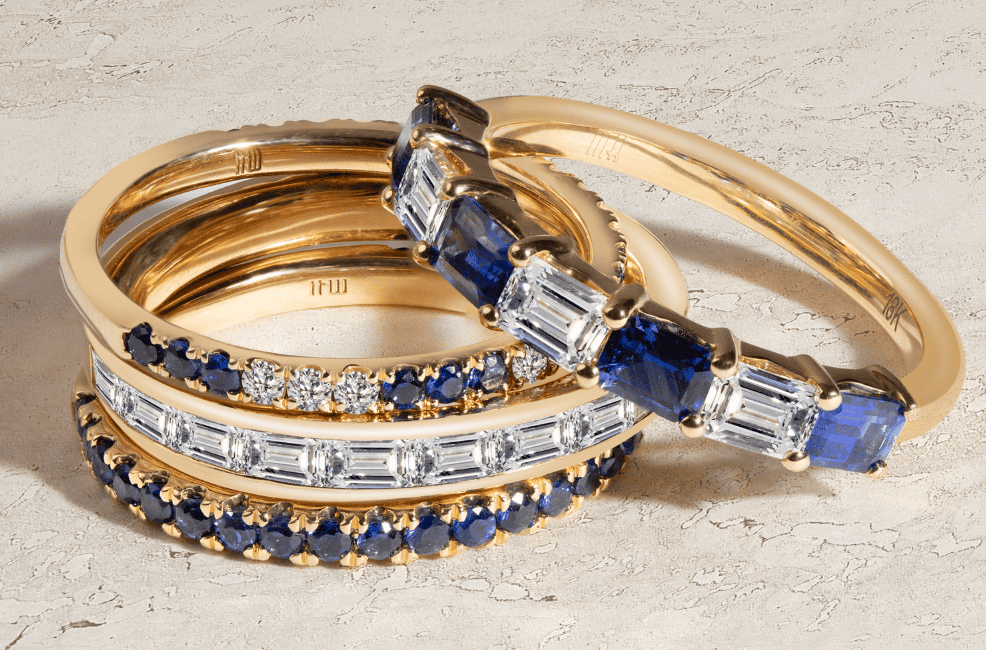


If you love clean lines, geometric shapes, and jewelry that makes a statement through subtlety rather than sheer sparkle, the baguette cut diamond might be exactly what you’re looking for. This sleek, rectangular stone has been a favorite of jewelry lovers for over a century, and we’ve seen renewed interest from couples who want something distinctive yet timeless for their engagement rings and wedding bands.
Whether you’re considering baguette diamonds as elegant side stones for your center diamond or exploring a full baguette eternity band, this guide covers everything you need to know. We’ll walk through what makes baguettes special, how they differ from other diamond cuts, and what to look for when selecting these understated beauties.
What Is a Baguette Cut Diamond?
A baguette cut diamond is a step-cut stone with a long, rectangular shape and typically 14 facets. The name comes from the French word for a long, thin loaf of bread, which perfectly describes the stone’s slender, elongated appearance. Unlike brilliant-cut diamonds that are designed to maximize sparkle through dozens of angled facets, baguettes feature parallel, linear facets that create a sleek, mirror-like effect. You’ll find them used as accents throughout our wedding bands and engagement ring settings.
This simpler facet structure produces what gemologists call a “hall of mirrors” effect. Rather than fiery bursts of light, you’ll see broad, elegant flashes that emphasize the diamond’s clarity and clean geometry. It’s a look that appeals to those who prefer understated sophistication over maximum brilliance. Round stones can be alternated with baguettes for contrast, or used in their place entirely, depending on the rhythm you want along the band.
There are two main variations you’ll encounter when shopping for engagement rings with baguette accents:
- Straight baguettes have parallel sides that create a perfect rectangle. These work beautifully in eternity bands and channel settings where uniformity matters. When placed side by side, straight baguettes line up seamlessly around the finger for a continuous flow of light.
- Tapered baguettes narrow toward one end, forming a trapezoidal shape. This design makes them ideal as side stones on engagement rings because they create a graceful transition from the band to a larger center stone.
A Brief History: From Art Deco to Modern Romance
The baguette cut has roots dating back to the 16th century, when jewelers created what was then called the “hogback” cut, an elongated table cut often used for diamond monograms and jeweled letters. The modern baguette as we know it truly came into its own during the Art Deco period of the 1920s and 1930s.
Art Deco was all about geometric forms, clean lines, and architectural precision. The baguette’s linear facets and rectangular shape fit perfectly with the era’s aesthetic, and the cut became synonymous with sophisticated, modern design. Today we’re seeing a strong revival of that look, which you can explore across our vintage engagement rings. To learn more about the era’s signature styling, read our guide to styling Art Deco-inspired jewelry.
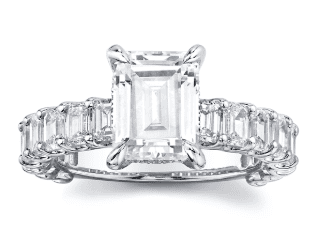
Why Choose Baguette Diamonds?
Baguettes offer several advantages that make them appealing for both engagement rings and fine jewelry:
- Architectural elegance: Their clean, linear design complements virtually any center stone shape while adding a sophisticated, structured look.
- Finger-flattering: The elongated shape can make fingers appear longer and slimmer, which many find attractive.
- Everyday value: Because baguettes are typically used in smaller carat weights and have a straightforward cutting process, they’re an accessible way to add diamond detail to a design.
How Baguette Diamonds Compare to Other Cuts
Baguette vs. Emerald Cut
Both baguettes and emerald cut diamonds belong to the step-cut family and share that distinctive hall of mirrors effect. Emerald cuts typically have 50 to 58 facets compared to the baguette’s 14, which gives them more internal brilliance, and their corners are beveled where a baguette’s stay sharp and squared. Emerald cuts are commonly used as center stones; baguettes shine brightest in supporting roles.
Baguette vs. Round Brilliant
The round brilliant is designed to maximize sparkle with its 57 or 58 precisely angled facets. Baguettes take the opposite approach, prioritizing clean lines and clarity over scintillation. If you want fire and brilliance, choose round. If you prefer sleek elegance and geometric precision, baguettes deliver.
What to Look For When Buying Baguettes
01
CLARITY IS CRITICAL
Large, open step facets reveal inclusions that a brilliant cut would scatter light over. Baguettes offer no camouflage, so a cleaner clarity grade pays off visibly.
02
COLOR CONSISTENCY
Open facets show body color readily, so side stones must match the center. Aim for G or better against white gold and platinum; warm metal gives you more latitude.
03
SYMMETRY AND PRECISION
Any imperfection is immediately visible in so simple a geometry. Sides should be truly parallel or evenly tapered, corners crisp, and every stone in a set matched in dimension as well as weight.
Length-to-width ratio is the last variable. Baguettes typically run from about 1.5:1 to as much as 5:1. Wider stones look more substantial while longer, thinner ones read delicate, and for side stones the ratio should complement both the center stone and the band width.
Popular Ways to Wear Baguette Diamonds
One of the baguette’s greatest strengths is its versatility, from three-stone engagement rings to channel-set bands.
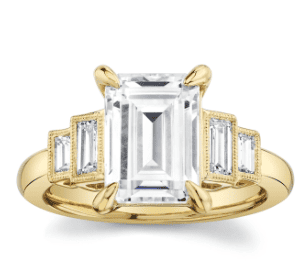
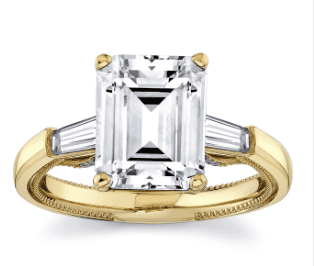
Tapered baguettes are classic choices for flanking a center diamond, adding balance and a graceful transition from band to center. Straight baguettes set in a continuous row create eternity bands, where channel settings protect the vulnerable corners while keeping the surface seamless.
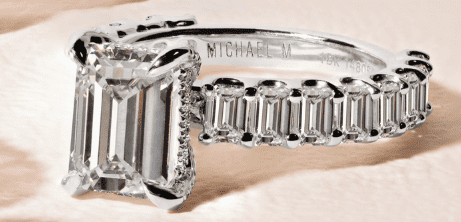
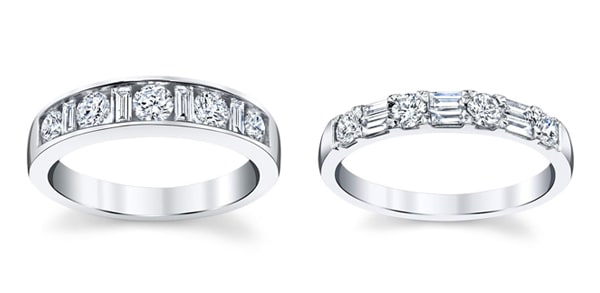
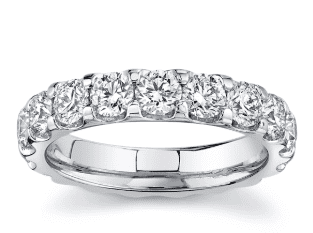
The pieces here show the three roles a baguette usually plays: framing a center stone, carrying an eternity row, and detailing a band meant to sit alongside one.

Verragio 18K Yellow Gold Natural Diamond Engagement Ring Setting
- 18K yellow gold from Verragio
- Shaped for a center stone, sold separately
- 1/2 ct. tw. of natural side diamonds

Memoire Platinum Natural Diamond Eternity Wedding Band
- Platinum from the Memoire collection
- Continuous eternity row with no break in the setting
- 2 3/4 ct. tw. of natural diamonds

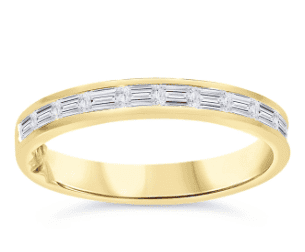
A.JAFFE 14K Yellow Gold Natural Diamond Wedding Band
- 14K yellow gold from A.JAFFE, polished finish
- Band width suited to wearing alongside a solitaire
- 1/2 ct. tw. of natural diamonds
Ballerina and Channel Settings
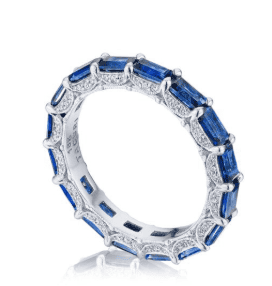
For something truly statement-making, the ballerina setting fans baguettes out around a center stone, resembling a ballet dancer’s tutu. Baguettes set sideways in a channel do something quieter but just as distinctive: the horizontal orientation showcases the stones’ length and reads as unexpectedly modern next to a traditional round diamond band.
Fine Jewelry
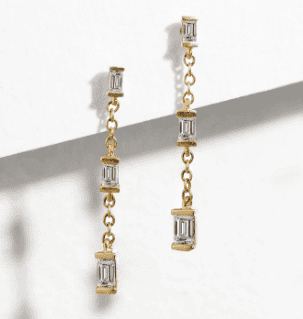
Beyond bridal, baguettes appear in elegant line bracelets, pendants, and earrings. Their rectangular shape sits flush against skin and neighboring stones, making them ideal for creating seamless, flowing designs.
Caring for Baguette Diamond Jewelry
While diamonds are the hardest natural material, baguettes do call for some special consideration because of their design:
- Protect those corners: The sharp, squared corners chip more readily than the beveled corners of emerald cuts or the rounded edges of brilliant cuts. Channel and bezel settings mitigate this.
- Regular cleaning: Large, open step facets show fingerprints and oils more readily than brilliant cuts.
- Professional checkups: Because baguettes are often set as accent stones, have settings inspected regularly so every stone stays secure.
- Safe storage: Store baguette pieces separately to prevent scratching from harder stones or metals.
Our Designers Featuring Baguette Accents
Many of the designers we carry incorporate baguette diamonds into their vintage-inspired and Art Deco collections. Tacori, known for intricate detailing and romantic designs, uses baguettes to add geometric interest to their settings. Verragio‘s architectural approach often features baguette accents that complement their signature styling. And A.JAFFE brings century-old craftsmanship to designs that showcase baguette side stones. Our RB Signature collection also includes options with baguette diamonds, in both natural and lab-grown.
The Robbins Brothers Difference
For more than 100 years, we’ve helped couples find engagement rings and wedding bands that tell their unique stories. Our jewelry consultants understand the nuances of diamond selection, including what makes baguettes special and how to evaluate them properly.
When you visit one of our showrooms across California, Arizona, Texas, and Washington, you can view diamonds in our VIP diamond viewing rooms under ideal lighting conditions. That matters more for step-cut stones than for anything else we sell, because clarity and color are the two things a baguette cannot hide.
Frequently Asked Questions About Baguette Diamonds
What is a baguette cut diamond?
It is a step cut, which means the facets run in straight parallel lines rather than the angled ones a round diamond uses. The practical consequence is what to shop for: a baguette is chosen on clarity and color rather than on sparkle, because a step cut conceals far less than a brilliant does. We carry them straight and tapered, and our consultants can hold both against a center stone so you can see which suits it.
Can baguette diamonds be used as center stones for engagement rings?
While baguettes are most commonly used as accent or side stones, they can be used as center stones for those who want a truly unconventional look. A larger baguette center makes a bold, architectural statement. Because baguettes have fewer facets than brilliant cuts, they display less sparkle in that role, so we recommend visiting a showroom where our jewelry consultants can show you options side by side.
Are baguette diamonds more fragile than other cuts?
The sharp, squared corners of baguettes are more vulnerable to chipping than the beveled corners found on emerald cuts or the rounded edges of brilliant cuts. Protective settings like channel or bezel settings help shield these corners. With proper care and secure settings, baguettes hold up well to daily wear, and our team can inspect your settings any time you stop in.
How do I match baguette side stones to my center diamond?
Match the color grade to your center diamond so the stones appear consistent, and make sure the baguettes match each other in clarity, color, and physical dimensions. Size matters more than carat weight here, because two stones of equal carat weight can have different proportions. Our consultants can help you pair stones that read as one cohesive design.
Do you carry engagement rings with baguette diamonds?
Yes. We stock engagement ring styles featuring baguette diamonds from designers including Tacori, Verragio and A.JAFFE, alongside our own RB Signature collection, plus wedding bands with channel-set baguettes. Visit any of our showrooms to view options in person, or book an appointment for personalized assistance.
Do you offer both lab-grown and natural baguette diamonds?
Yes. We carry both natural and lab-grown baguette diamonds, and our jewelry consultants can walk you through the differences so you can choose the option that aligns with your values and budget.
Can I create a custom ring with baguette diamonds?
Absolutely. Our in-house design studio works closely with you to create something uniquely yours. Whether you are starting from scratch, adding baguette accents to an existing design, or reimagining an heirloom piece, our master jeweler can build it with you.
Do I need an appointment to shop for baguette diamond jewelry?
Walk-ins are always welcome, but we recommend booking a consultation so you have dedicated time with one of our jewelry experts.
Or find a Robbins Brothers near you to explore our baguette diamond collection in person. You can also browse our Pinterest board for inspiration.
Recommended
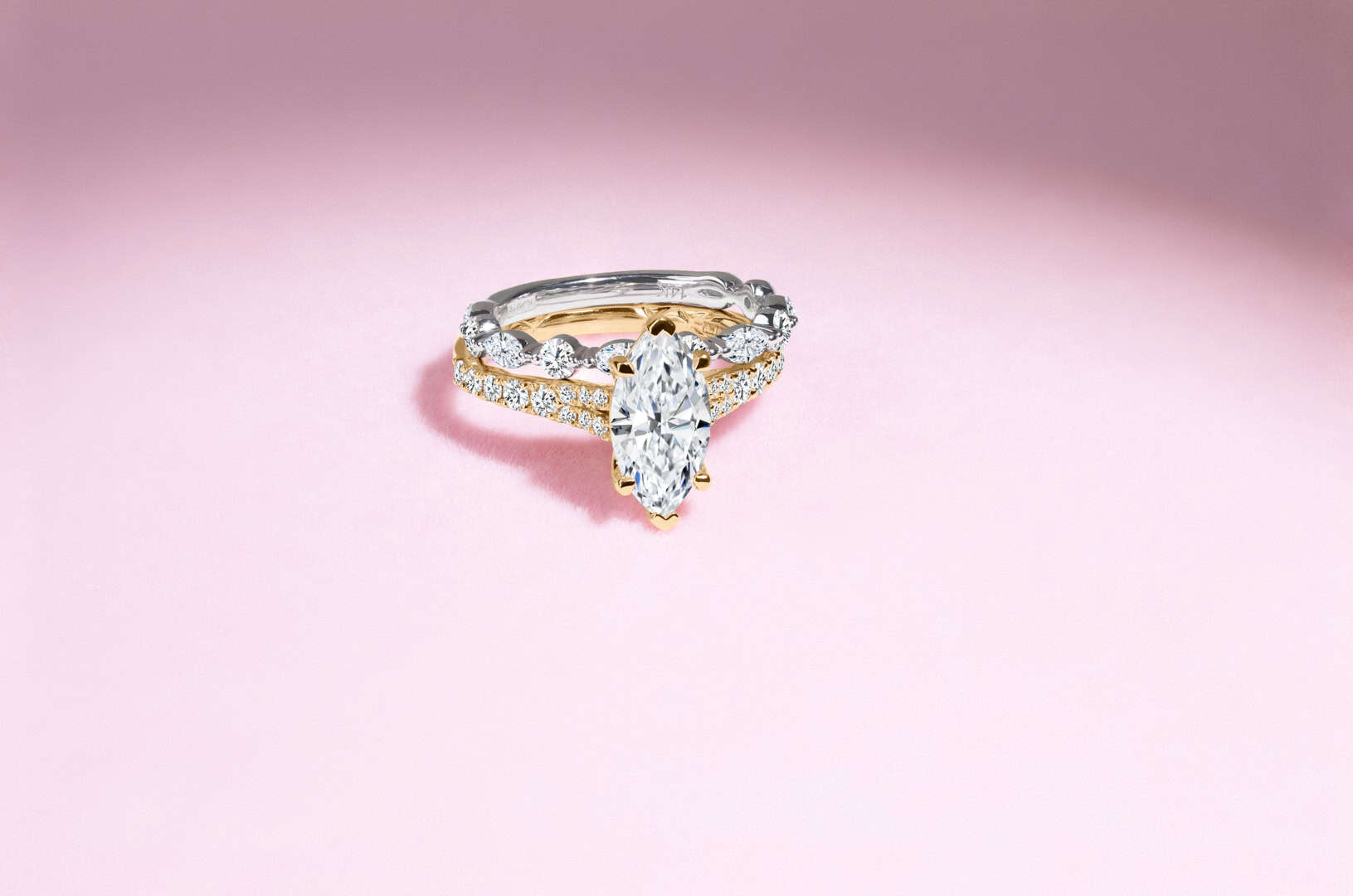
Selena Gomez’s Marquise Cut Diamond Engagement Ring
When Selena Gomez announced her engagement to Benny Blanco, the ring drew as much attention as the news. She went…
read more
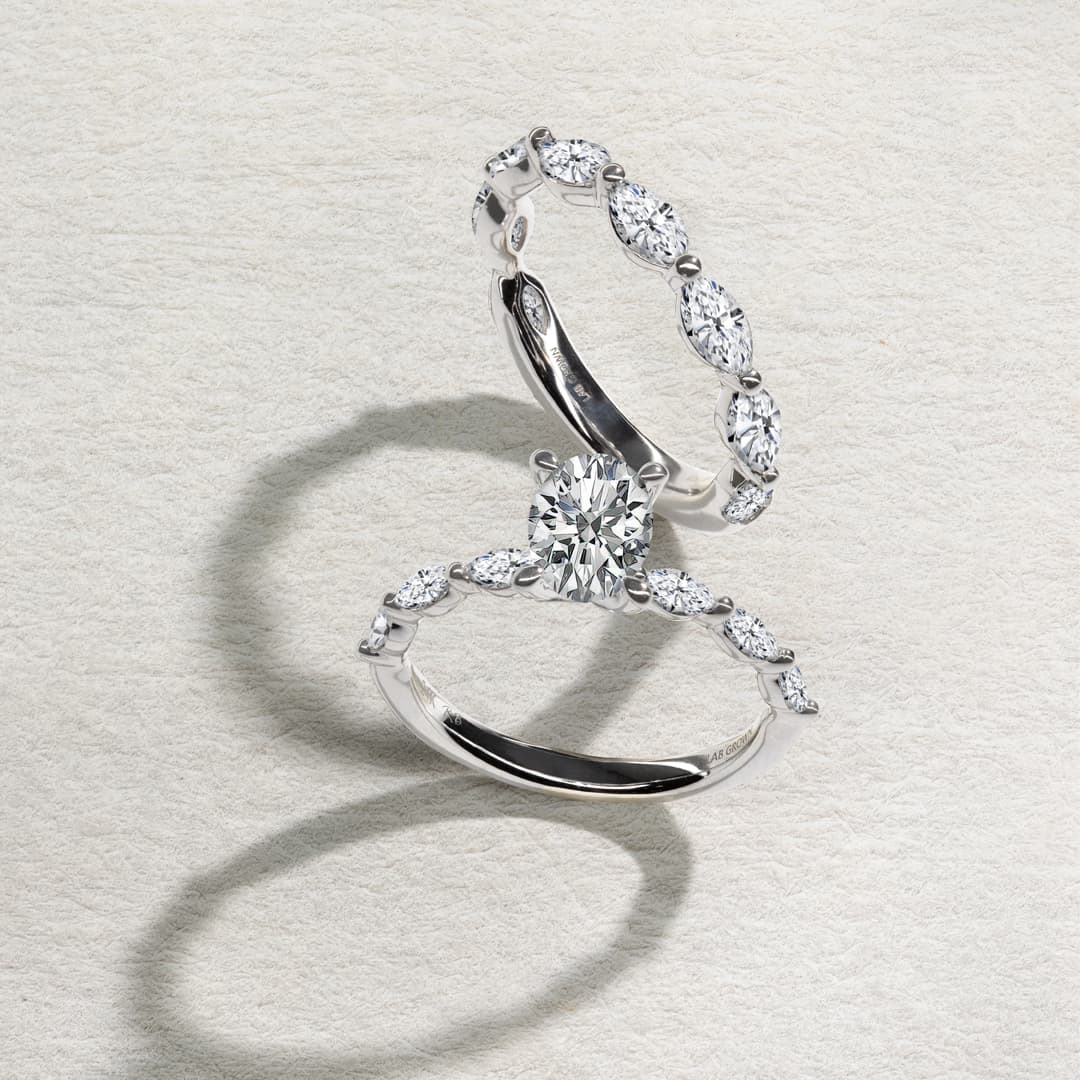
Your Guide to Marquise Cut Diamond Engagement Rings and Wedding Bands
A marquise is an elongated brilliant cut with two pointed ends and softly curved sides, and it is one of…
read more
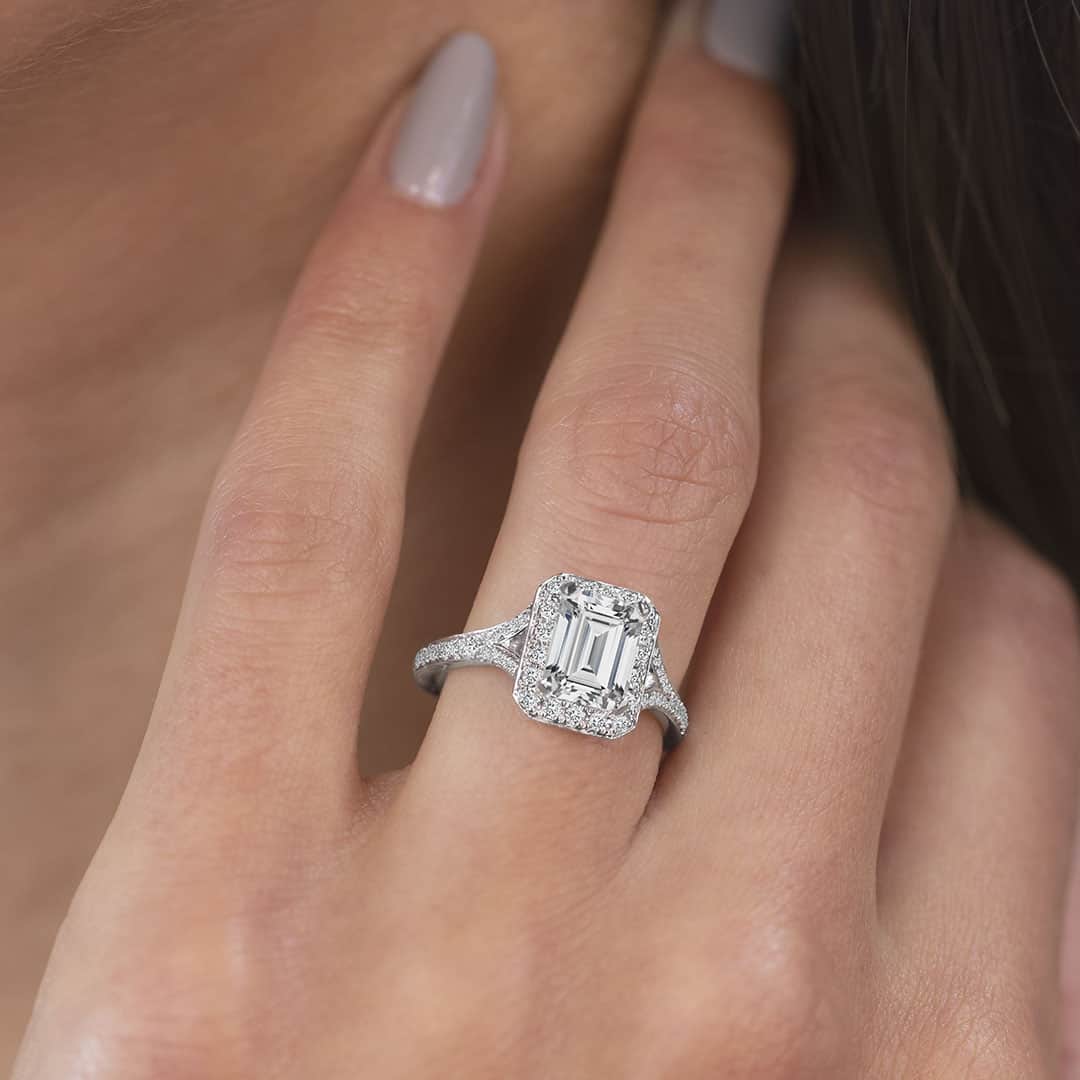
All About Emerald Cut Diamonds for Engagement Rings and Wedding Bands
Looking for an elegant diamond that can be styled as modern or vintage? An emerald cut might be the perfect…
read more