Home » Engagement & Wedding Rings » Wedding Bands
Matching and Complementary Couple’s Wedding Bands


Looking for his and hers, his and his, or hers and hers matching wedding bands? Your rings tell your unique story as a couple. Whether your style showcases your differences and the ways you complement each other, or you prefer a coordinated set that shows all the ways you’re alike, we can help you find the perfect pairing.
Some couples want rings that match perfectly. Others prefer bands that coordinate while still expressing individual personalities. There’s no right or wrong approach, and over our more than 100 years helping couples, we’ve seen every combination imaginable. Below we walk through both approaches, show you real pairings from our collection, and cover what to look for when you shop together.
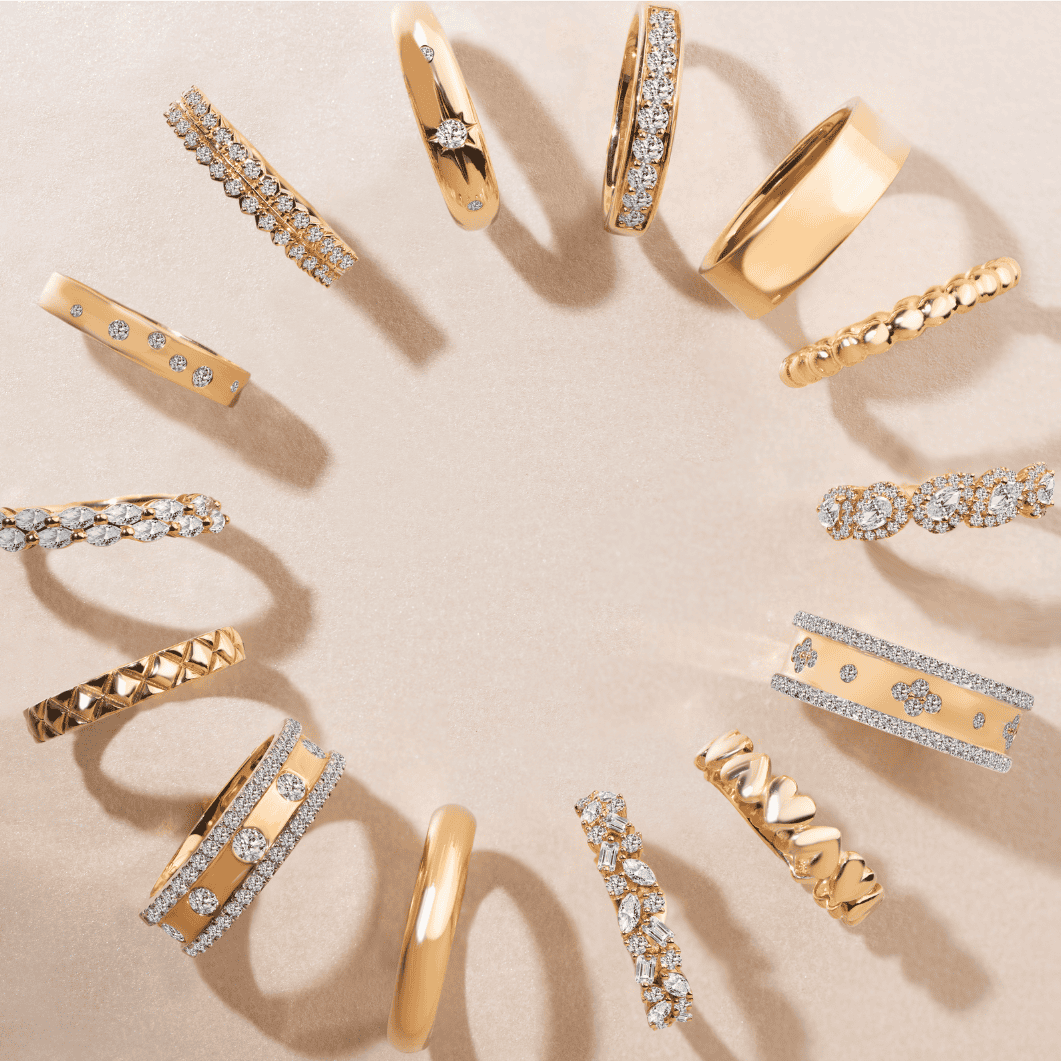
Understanding Matching vs. Complementary Wedding Bands
Matching bands are typically identical or near-identical in design, using the same metal, finish, and detailing. One partner might choose a wider width, but the overall look remains consistent.
Complementary bands take a different approach. These rings share common elements, like the same metal color, similar textures, or coordinating details, while still allowing each partner to express their personal style. Think of it like two musicians playing in harmony rather than unison.
Many couples we work with end up somewhere in between. They might choose bands in the same metal with different widths, or select similar designs where one features diamonds and the other remains understated. The key is finding rings that feel connected while honoring what each person wants to wear every day.
What to Look for When Shopping for Couple’s Wedding Bands
When you visit one of our showrooms to explore wedding bands together, our jewelry consultants will guide you through several considerations. Here’s what we recommend keeping in mind:
- Matching detailing: Look for shared elements like rose gold inlay, similar engraving patterns, or the same diamond cut. Even small details can create a clear connection between two rings.
- Similar styling: Consider whether you both gravitate toward modern, bold, or traditional designs. A pair of rings that share the same design sensibility will read as a set even when the specifics differ.
- Coordinating color accents: Hints of blue from sapphires, warm rose gold tones, or black details can tie two very different bands together beautifully.
- Reflections of shared interests: Some couples choose details that reflect their hobbies or favorite memories together, which is often where a custom design starts.
Complementary Bands: Three Places to Start
Complementary pairings usually begin with one partner finding a band they love, then building the second ring around a shared thread. These three are good starting points because each offers a different thread to pull on. Yellow gold brings warmth that harmonizes with almost any partner band. A colored accent, like the navy running through Damascus steel, gives you a hue to echo in a sapphire or a blackened detail. And a slim polished band sets a quiet baseline that a bolder ring can sit against without either one competing.

Mfit 14k Yellow Gold and Tantalum 7.5 mm Natural Diamond Wedding Band 3/8 ct. tw.
- 14k yellow gold combined with tantalum, satin finish
- 3/8 ct. tw. natural diamonds in a modern design
- 7.5 mm width, the warm option that pairs with almost any gold band

Lashbrook Damascus Steel 8 mm Wedding Band
- Damascus steel with navy blue cerakote detail
- Lashbrook, polished finish in a modern design
- 8 mm comfort fit, and the navy is the color to echo in a partner band

14k White Gold Natural Diamond Wedding Band 1/10 ct. tw.
- 14k white gold, rhodium plated, polished finish
- 1/10 ct. tw. natural diamonds, subtle rather than showy
- 1.5 mm width, the slimmest here and the easiest to pair against
Classic Couple’s Wedding Band Sets
For couples drawn to traditional styles, matching bands in the same metal and profile create a timeless pairing. Varying the width and edge details lets each partner have a ring that fits comfortably while keeping the coordination obvious. These Christian Bauer bands are the clearest example we stock: same metal, same family of profile, with the width difference and the diamonds doing the individualizing.
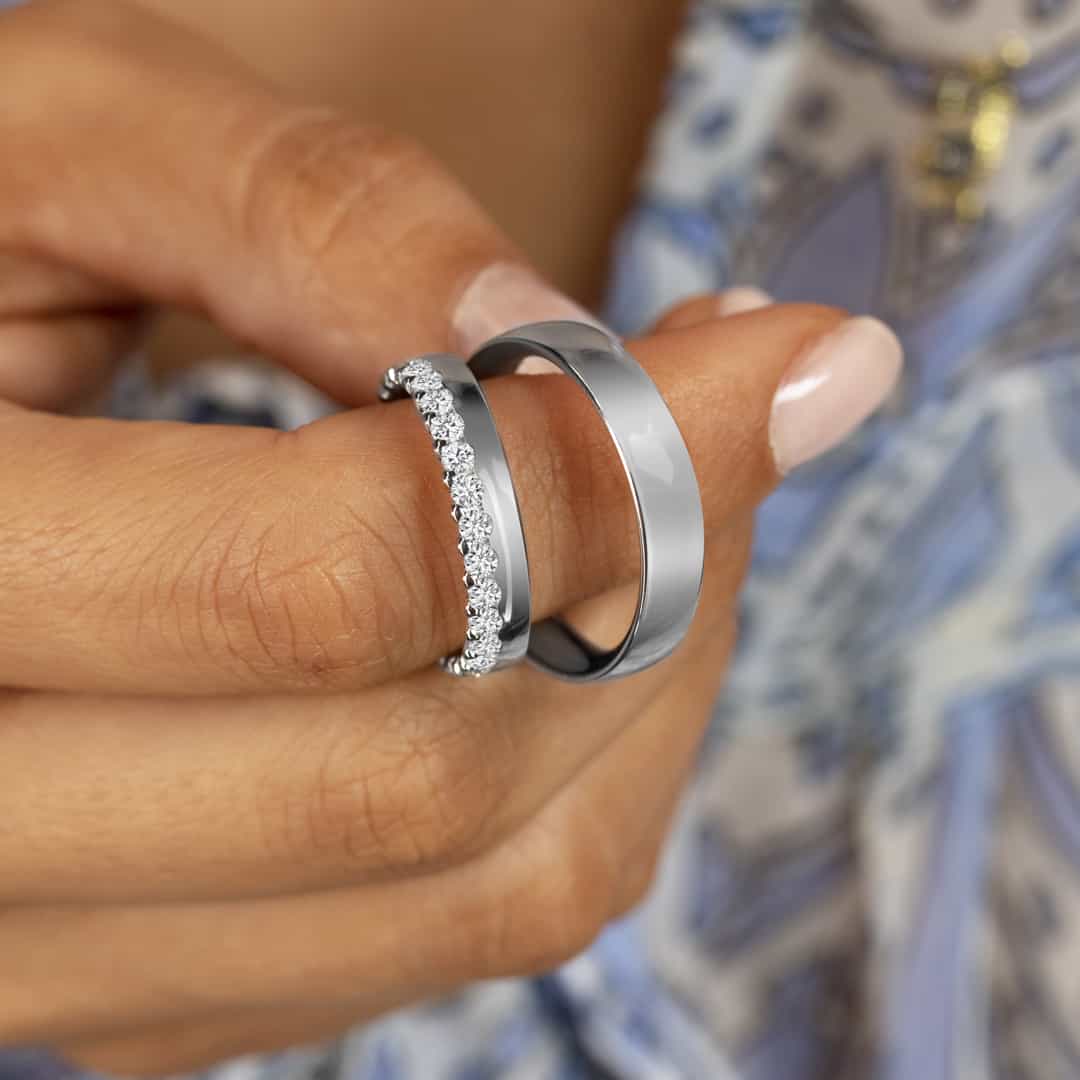
Matching Men’s Wedding Bands
For couples seeking two men’s bands, a cohesive pair in different widths is the simplest route. The same metal creates instant coordination while the width variation reflects hand size and personal preference. These A.Jaffe bands come in 6 mm and 7 mm, which is a small enough gap to read as a set and a large enough one to feel chosen.

Complementary Women’s Wedding Bands
For couples looking for two women’s bands, intricate and complementary styling creates a paired look without either ring repeating the other. The Sethi collection is built for exactly this: the diamond weights run from 1/10 up to 5/8 ct. tw. across the group, so you can pick two that sit at different volumes while sharing the same metal and the same organic design language.
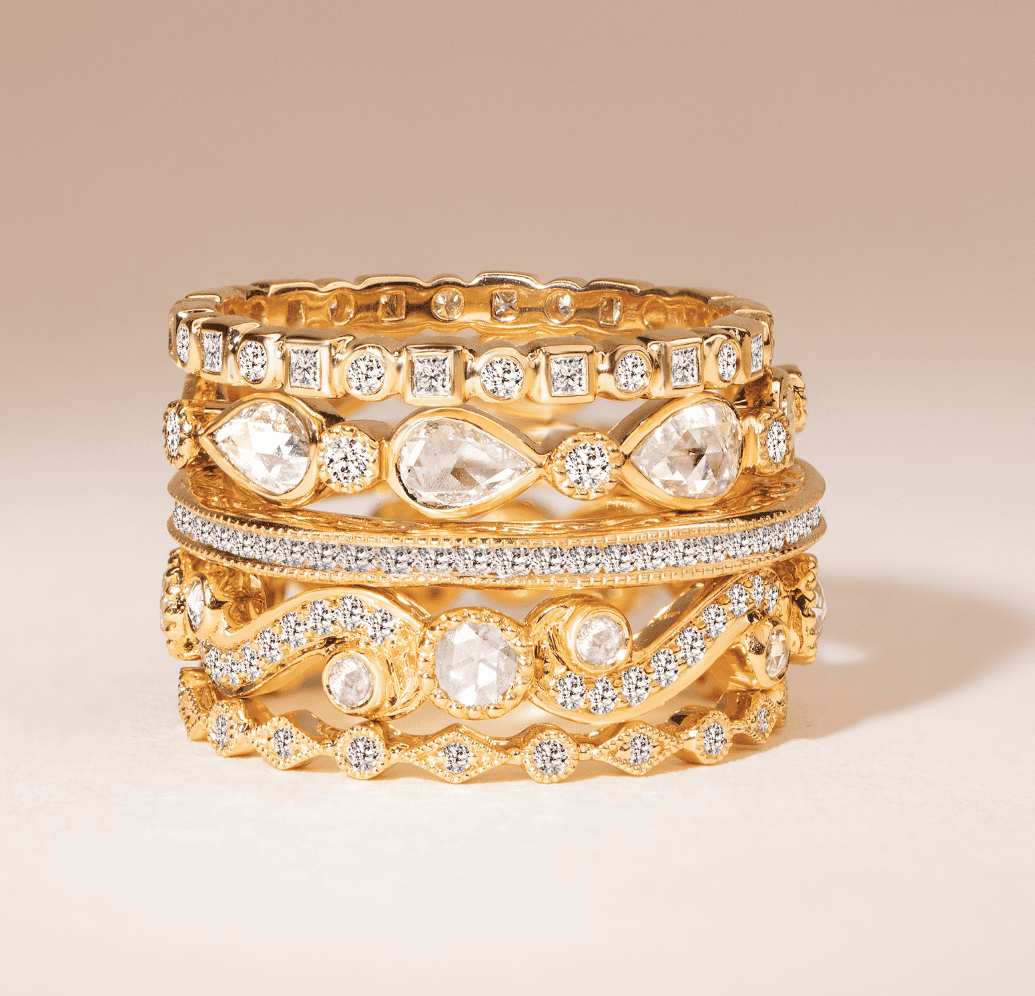
Making a Strong Statement Together
Some couples want bands with presence that still read as understated. A white gold band with diamond detailing offers refined sparkle that comes across as confident rather than flashy, and it works whether the partner band is more substantial or more restrained. That flexibility is the point: one ring can carry the detail while the other stays plain, and the pair still looks deliberate.

14k White Gold Natural Diamond Wedding Band 1/4 ct. tw.
- 14k white gold, rhodium plated, satin finish
- 1/4 ct. tw. natural diamonds in a modern design
- Enough detail to lead a pair, restrained enough to follow one
The Art of Mixing Metals and Materials
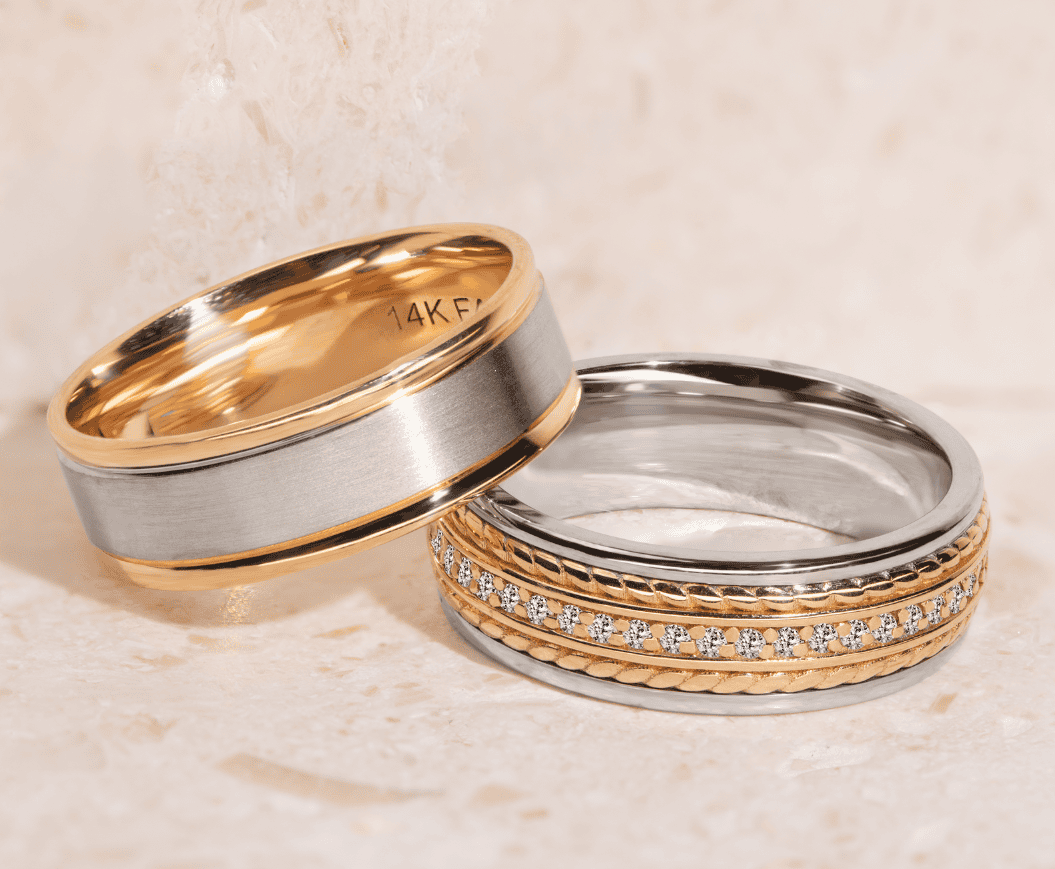
Modern couples increasingly mix metals within a pairing. Rose gold with white gold, yellow gold with platinum, or traditional metals with alternative materials like tungsten or Damascus steel can all work. The key is finding another connecting element, whether that is a shared texture, a coordinating gemstone, or a repeated design detail. Our jewelry consultants are good at spotting those connections and building pairings that look intentional rather than mismatched.
If you are considering mixed metals, try the combination in person. What looks good in photographs often reads differently when both rings are on your hands under the same light, which is the single strongest argument for making this particular decision in a showroom.
Choosing for Your Lifestyle
01
IF YOU ARE ACTIVE
Wider bands with beveled edges tend to feel more comfortable during physical activity, because the rounded edge stops the ring biting into the fingers either side of it. Comfort fit is worth asking about specifically.
02
IF YOU WORK WITH YOUR HANDS
Lower-profile designs without protruding stones take far less abuse. A flush or channel setting keeps diamonds below the surface of the metal, where they are much harder to knock loose during a working day.
03
IF YOUR NEEDS DIFFER
That is perfectly fine, and common. A coordinated look still works when one ring is more substantial or more practical than the other. What matters is that each person has a ring they will actually enjoy wearing every day.
The Robbins Brothers Difference
For more than 100 years we have been helping couples find wedding bands, and the part we are best at is the part that is hard to do alone: seeing two rings together. Our VIP diamond viewing rooms give couples a private space to lay out combinations, and we will happily let you try as many as you like without steering you toward a particular style or price point.
We are employee owned, so the person helping you has a stake in your leaving happy. Every wedding band we sell comes with our lifetime warranty, including complimentary cleaning, inspection, and maintenance, and we carry both natural and lab-grown diamonds so you can choose on your own terms rather than ours.
Frequently Asked Questions About Couple’s Wedding Bands
Do wedding bands need to match exactly?
Wedding bands don’t need to match exactly. Many couples choose complementary wedding bands that share common elements like metal color or design style while still reflecting individual preferences. The most important thing is that both partners love their rings and feel they work well together as a pair.
What wedding band styles work best for couples with different tastes?
Find a connecting element such as matching metal color, similar finishes, or coordinating details like shared gemstone accents. One partner might prefer a minimalist wedding band while the other chooses a diamond-accented design. As long as there is visual harmony through one or two shared features, the rings will complement each other beautifully.
Can you create custom matching wedding bands at Robbins Brothers?
Yes, through our in-house design studio. Our master jeweler works with couples to design bands that reflect their personal style and relationship, and custom work can incorporate meaningful details, specific materials, or adaptations of existing designs to create a perfectly coordinated set. It is also the answer when one partner’s dream ring exists and the other’s does not.
Should couples shop for wedding bands together?
Many couples find that shopping together leads to better results, because you can try combinations on and see how rings look side by side rather than imagining it. Some couples prefer choosing independently, and that works too. We can accommodate both approaches and help make sure you end up with rings that suit each other either way.
What metals work best for matching couple’s wedding bands?
Yellow gold, white gold, platinum, and rose gold all work beautifully. The best metal depends on personal preference, skin tone, and lifestyle. Many couples choose the same metal for both bands for visual coordination, though mixing metals with another connecting element can look just as considered.
How do I know what width wedding band to choose?
Width is a personal preference that depends on hand size, finger shape, and comfort. Broadly, wider bands of 6 mm and above make more of a statement, while narrower bands of 3 to 4 mm feel more delicate. We recommend trying on several widths in person, and many couples choose different widths for each partner while keeping the same metal and style.
Can wedding bands be resized later?
Gold and platinum bands can usually be resized by our jewelers, though a band set with stones all the way around is more involved. Alternative materials are the ones to think hard about up front: tungsten, Damascus steel, and tantalum generally cannot be resized because of their rigid structure, so getting the fit right at purchase matters more with those.
Do both bands need to come from the same designer?
Not at all. Staying within one collection is the easy way to guarantee the metals and finishes match, which is why designer sets are popular, but plenty of couples mix designers and connect the rings through a shared detail instead. Bring both preferences to us and we will find the thread.
Ready to Find Your Perfect Wedding Bands?
Your wedding bands will be with you every day, symbolizing your commitment and love. Whether you choose matching rings, complementary styles, or something completely custom, we are here to help you find the perfect pair.
Or find a Robbins Brothers near you to explore our collection with expert guidance from our jewelry consultants.
Recommended
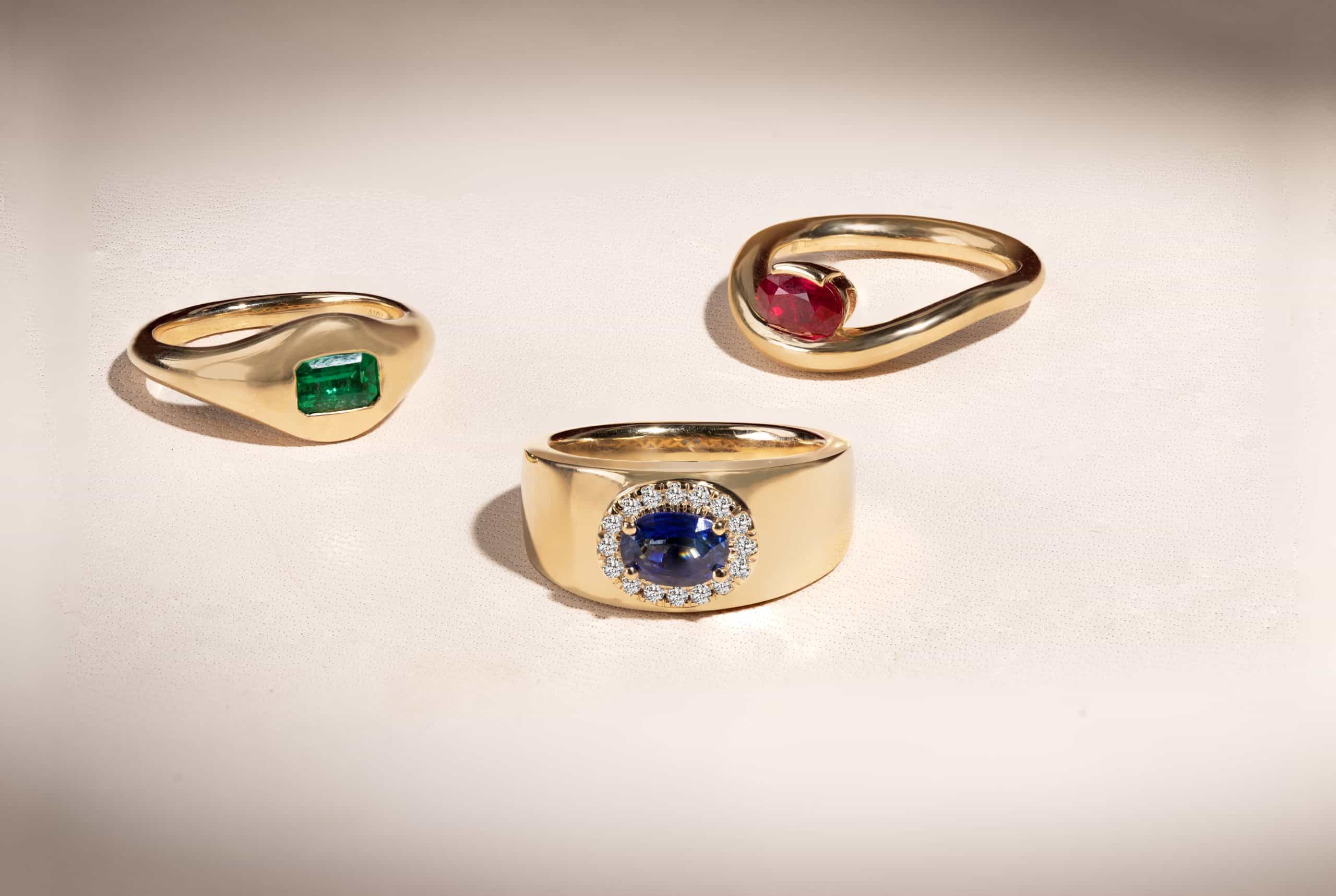
Unique Bridal Jewelry Styles: Non-Traditional Engagement and Wedding Rings
If you are looking for a unique engagement or wedding ring, we can help you get inspired. The perfect ring…
read more
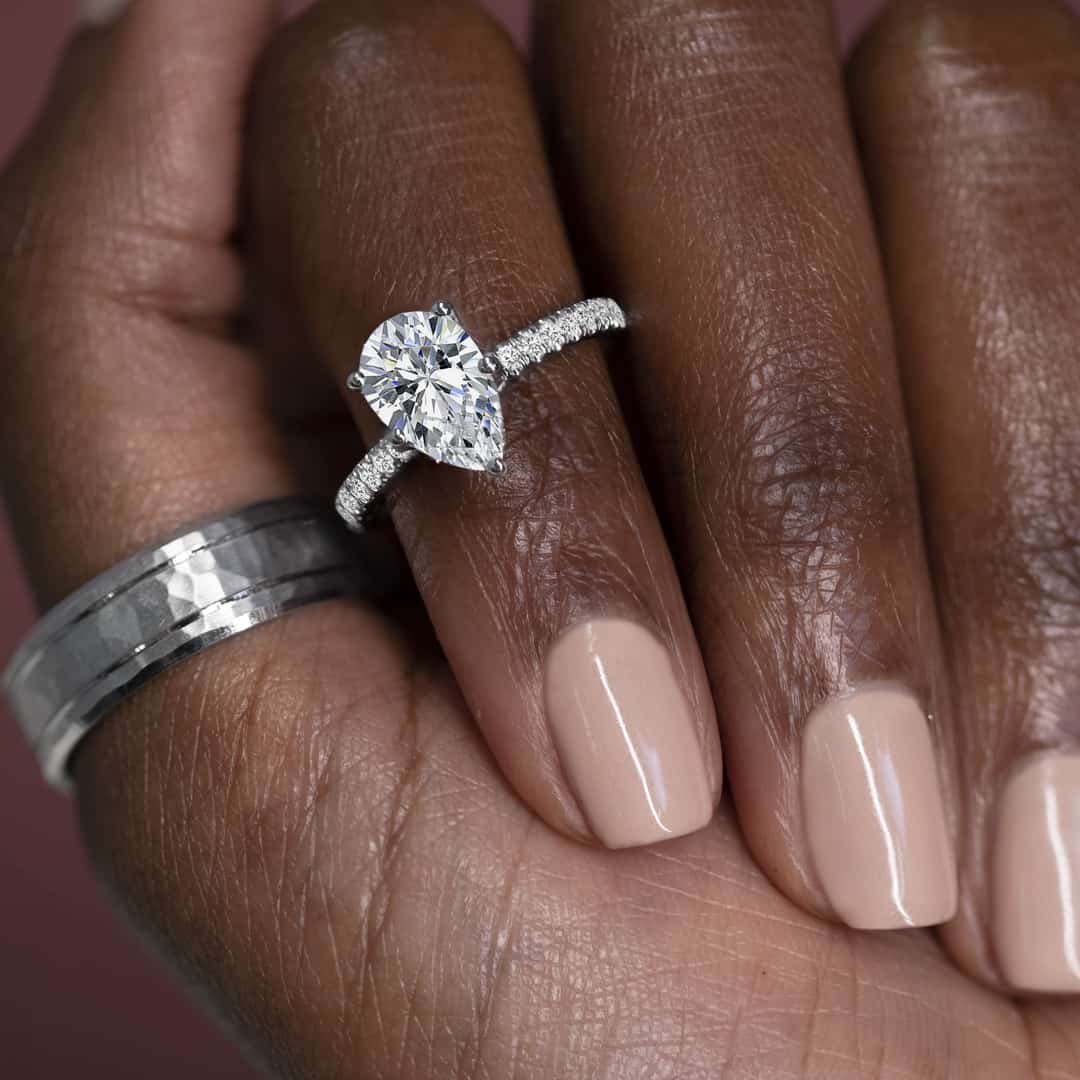
Pear-Shaped Diamond Engagement Rings with Wedding Bands
Pear-cut diamonds are elegant and elongating and work well in any engagement ring setting.
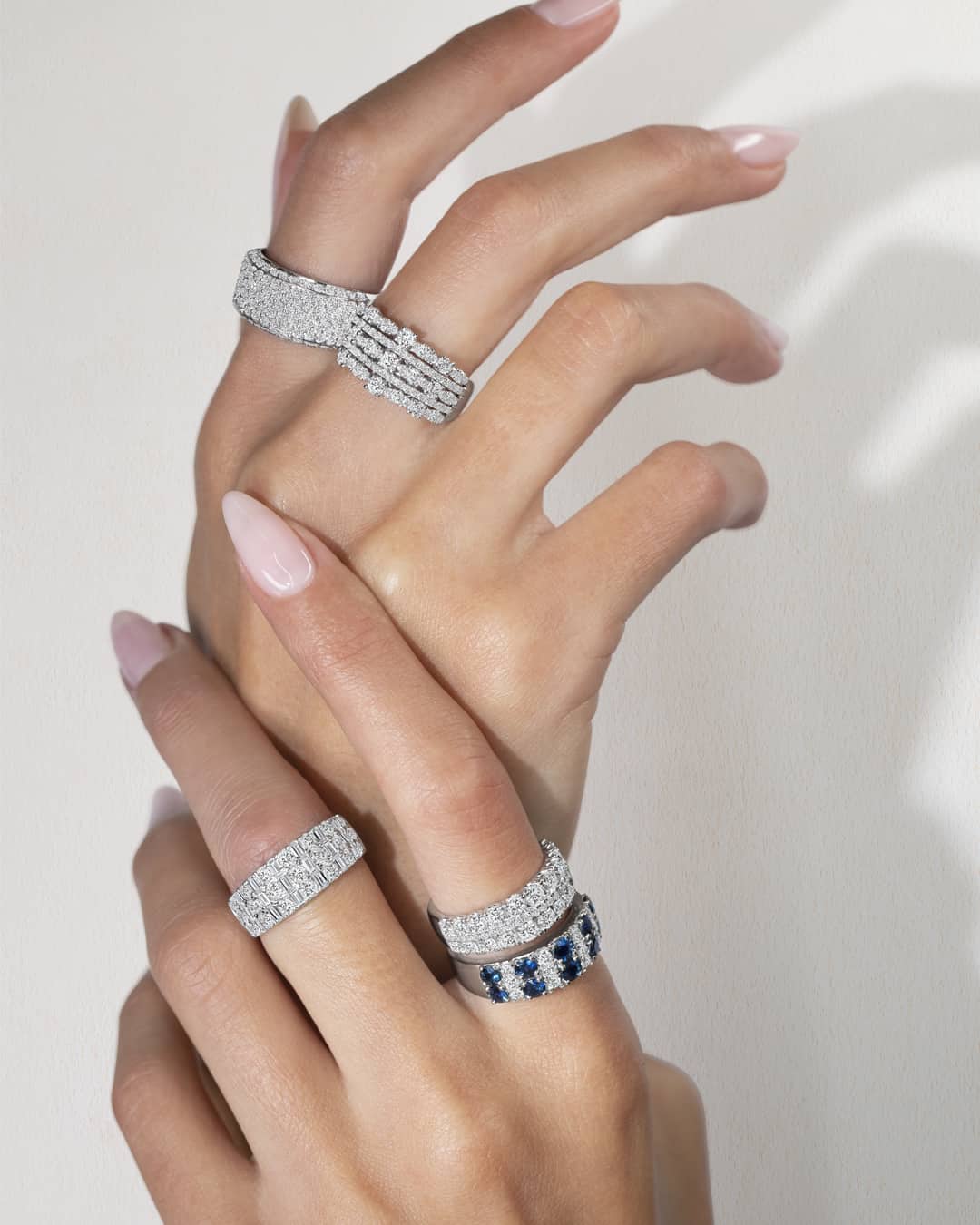
Wide Band Engagement Rings and Wedding Bands For Elegance and Durability
Today, we cast a spotlight on an emerging favorite among modern couples: wide band engagement rings and wedding bands. With…
read more