Home » Engagement & Wedding Rings
Complete Guide to Wedding Band Metal Options
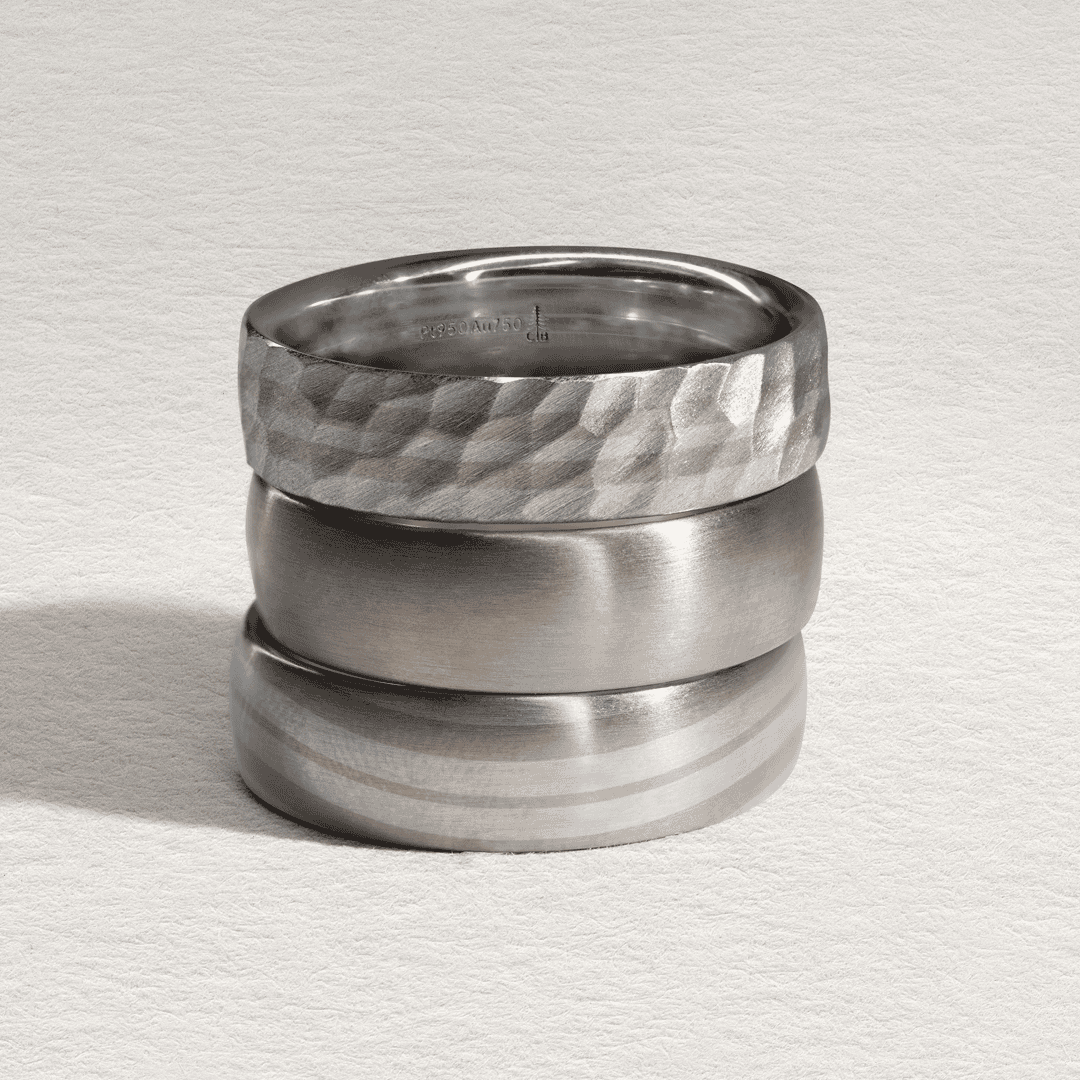


Choosing a wedding band metal matters as much as choosing the design. The metal determines how the ring feels on your finger, how it ages, what it costs to maintain, and whether it can be resized down the road. Below is a quick comparison of the popular options, from classic platinum and gold to modern alternatives like titanium and tungsten, so you can find the metal that fits your life.
For a deeper look at how each metal is made and how it wears, see our guide to jewelry metals.
Metal Comparison at a Glance
| Metal | Weight | Hypoallergenic | Resizable | Maintenance |
|---|---|---|---|---|
| Platinum | Very heavy | Yes | Yes (specialist) | Occasional polish |
| Yellow Gold | Moderate | Varies by alloy | Yes (standard) | Annual polish |
| White Gold | Moderate | Varies by alloy | Yes (standard) | Rhodium replating every 1 to 2 years |
| Rose Gold | Moderate | Varies by alloy | Yes (standard) | Minimal |
| Palladium | Light | Yes | Yes (specialist) | Occasional polish |
| Titanium | Very light | Yes | No | Minimal |
| Tungsten | Heavy | Yes | No | Minimal |
| Cobalt Chrome | Moderate | Yes | Difficult | Minimal |
Platinum
Platinum is the rarest and densest of the precious metals we carry, and it is naturally white, with no rhodium plating required. When it scratches, the metal is displaced rather than lost, so it slowly develops a soft matte patina that many of our guests love. It is hypoallergenic, heirloom-durable, and the heaviest option we sell, and it carries premium pricing next to a comparable 14k gold band.
- Best for: heirloom durability, sensitive skin, and a substantial feel on the finger.
- Watch out for: the weight, which is noticeable, and the price.


Eternalle Platinum Lab-Grown Diamond Wedding Band
- Platinum, naturally white and hypoallergenic
- 1 ct. tw. lab-grown diamonds
- Eternalle designer collection

Gold
Gold is still the most popular metal in our showrooms, and for good reason. It is beautiful, durable enough for everyday wear, and available in three distinct colors. Pure gold is too soft for jewelry on its own, so it is alloyed with other metals, and the karat number tells you how much pure gold is in the mix.
Karat: which one to pick
- 14k (58.3% gold): the sweet spot for daily wear, with the best balance of richness, durability, and price.
- 18k (75% gold): richer color but a softer metal. Best for rings you wear occasionally or want to pass down.
- 10k (41.7% gold): the most durable but least saturated, and budget-friendly.
Yellow, white, or rose
Yellow gold is the warm, classic choice, the natural color of pure gold. White gold is yellow gold alloyed with white metals and finished with rhodium plating for a bright silvery look, and that plating wears off every 1 to 2 years and needs to be reapplied. Rose gold blends yellow gold with copper for a romantic, pinkish tone that does not require replating.

14k White Gold Diamond Wedding Band 3/4 ct. tw.
- 14k white gold
- 3/4 ct. tw. natural diamonds
- Bright rhodium-finished white

14k Yellow Gold 7mm Diamond Wedding Band 1/2 ct. tw.
- 14k yellow gold
- 1/2 ct. tw. natural diamonds
- 7mm width

A.Jaffe 14k Rose Gold Diamond Wedding Band
- 14k rose gold
- 7/8 ct. tw. natural diamonds
- A.Jaffe designer collection
Palladium comes from the same family as platinum and shares most of its best properties. It is naturally white, hypoallergenic, and durable, at a noticeably lighter weight and a lower price. If platinum feels too heavy on your finger but you still want a permanent white metal that does not need replating, palladium is the answer. Like platinum, it is best resized by a jeweler experienced with the metal, which we have on staff.

Christian Bauer Palladium 6.5mm Wedding Band
- Solid palladium, naturally white and hypoallergenic
- 6.5mm width, lighter on the finger than platinum
- Christian Bauer designer collection
Titanium
Titanium is the lightest band we sell, significantly lighter than gold, platinum, or even silver. It is the same aerospace-grade material used in aircraft, so it is remarkably strong for its weight, and it is hypoallergenic. The trade-off is that titanium cannot be resized with traditional jewelry techniques, so nail your size before you commit. It also cannot be modified, engraved deeply, or repaired by most jewelers, which is why titanium bands tend to come in clean, bold modern designs rather than detailed custom work.

Lashbrook Titanium 8mm Wedding Band
- Aerospace-grade titanium
- 8mm width
- Lashbrook designer collection

Lashbrook Titanium 8mm Comfort-Fit Band
- Aerospace-grade titanium
- 8mm comfort-fit interior
- Lashbrook designer collection

Lashbrook Titanium & Carbon Fiber 6mm Band
- Titanium with carbon-fiber inlay
- 6mm width
- Lashbrook designer collection
Tungsten Carbide: The Hardest Metal We Sell
Tungsten carbide is the most scratch-resistant material in our wedding band case, nearly as hard as a diamond. It holds a high polish indefinitely with just soap and water, and it is dense and substantial on the finger. Like titanium, it cannot be resized, and despite its hardness it is also brittle, so a sharp impact against a hard surface can shatter it. It is a popular pick for active wearers who would rather replace a ring than re-polish one.

Triton Grey Tungsten & Green Ceramic 8mm Band
- Grey tungsten with green ceramic inlay
- 8mm width
- Triton designer collection

Triton Grey Tungsten & Sapphire 8mm Band
- Grey tungsten with blue ceramic inlay
- Set with black sapphire
- Triton designer collection

Triton Black Tungsten & Blue Ceramic 6mm Band
- Black tungsten with blue ceramic inlay
- 6mm width
- Triton designer collection
Other Modern Alternatives
Beyond the headliners, we also carry a small but growing selection of bands in cobalt chrome, ceramic carbide, zirconium, and damascus steel. They are newer to the market, so they do not carry the heirloom heritage of platinum or gold, but for guests who want a distinctive, low-maintenance band with a contemporary look, they are hard to beat.


Lashbrook Damascus Steel 8mm Band
- Damascus steel with a red dinosaur bone inlay
- 8mm width
- Lashbrook designer collection

14k Yellow Gold & Tantalum 7.5mm Band
- 14k yellow gold and tantalum
- 3/8 ct. tw. natural diamonds
- 7.5mm width
How to Choose the Right Metal for You
Most of the choice comes down to four practical questions:
- Do you want to be able to resize it later? Stick with platinum, palladium, or any gold, and avoid titanium, tungsten, and most modern alternatives.
- Sensitive skin or a nickel allergy? Platinum, palladium, titanium, tungsten, ceramic carbide, and zirconium are all good choices.
- Active lifestyle? Tungsten resists scratches, and titanium resists impact while staying light. Avoid the softer 18k and 10k gold extremes.
- Budget priority? 14k gold, titanium, and tungsten give you the most ring for the money. Platinum is the splurge.
If you are still narrowing it down, our guide to modern men’s wedding bands walks through more men’s styles by metal, and our showroom team can put samples in every metal side by side so you can compare weight, shine, and feel in person.
A Quick Word on Maintenance
- Platinum: an occasional professional polish if you want to remove the patina.
- Yellow and rose gold, palladium, and cobalt chrome: mild soap, warm water, and a soft cloth at home.
- White gold: rhodium replating every 1 to 2 years.
- Titanium and tungsten: just soap and water, and avoid harsh chemicals.
The Robbins Brothers Difference
For more than 100 years, we have guided couples through the wedding band decision in our showrooms. We carry every major metal, from platinum and gold to titanium, tungsten, zirconium, and damascus steel, and we will let you handle samples in each so you can feel the weight, see the color, and compare finishes side by side. Our jewelry consultants will walk you through what each metal will look like in five and twenty years, and our master jeweler handles the sizing, resizing, and rhodium replating in house. Every ring we sell is backed by our product protection plan.
Or find a Robbins Brothers near you to compare metals in person.
Frequently Asked Questions
What is the difference between platinum and white gold for a wedding band?
They look almost identical at first, both a bright silvery white. The difference is underneath. Platinum is naturally white and never needs replating, while white gold is rhodium-plated and needs a fresh coat every 1 to 2 years. Platinum is also heavier, doesn’t have additions that may irritate sensitive skin, and priced at a premium, and it develops a soft matte patina over time rather than turning yellow.
Does a white gold wedding band need replating forever?
Yes. White gold needs rhodium replating every 1 to 2 years to keep its brilliant white look. If you would rather skip replating entirely, platinum and palladium are naturally white and never need it.
What is the most durable metal for a wedding band?
It depends on the kind of durability you want. Tungsten carbide is the most scratch-resistant metal we sell and holds its polish the longest, while platinum is the most enduring precious metal because it wears rather than loses material. Titanium is the toughest for its weight. For everyday wear that can also be resized and repaired, 14k gold and platinum are the classic all-rounders.
Can I resize a tungsten or titanium wedding band?
Tungsten cannot be resized at all, so if the fit is wrong the band has to be replaced. Titanium can sometimes be resized by a specialist, but it is expensive and results vary. Confirm your size before you buy either one.
Is titanium or tungsten better for an active lifestyle?
Titanium is lighter and will not shatter, which makes it a better all-around pick for very active wearers. Tungsten resists scratches better than any metal we sell, but it can crack on a sharp, hard impact. Choose titanium for high-impact work, and tungsten if your hands mostly take friction and everyday wear.
Which wedding band metals are better for sensitive skin?
Platinum, palladium, titanium, tungsten, ceramic carbide, zirconium, and cobalt chrome are all good choices. Gold depends on the alloy, and nickel-free gold alloys are widely available, so just ask us if you have sensitive skin.
Should my wedding band match my engagement ring?
It is entirely up to you. Matching the metal of your engagement ring gives a seamless look and keeps the two rings wearing evenly against each other, which is why many guests pair a white gold band with a white gold ring, or platinum with platinum. Mixing metals is also a popular, intentional look. Bring your engagement ring to any of our showrooms and we will help you see how each option pairs.
Or visit any of our showrooms to try on samples in every metal side by side. You can also browse our Pinterest board for inspiration.
Recommended
Selena Gomez’s Marquise Cut Diamond Engagement Ring
When Selena Gomez announced her engagement to Benny Blanco, the ring drew as much attention as the news. She went…
read more
Customizing Your Perfect Designer Engagement Ring
When you are ready to propose, you are confident about who you want to spend the rest of your life…
read more
Engagement Ring Settings vs. Complete Engagement Rings
Many of our engagement rings are available as settings, which let you choose the center stone separately from the ring…
read more