Home » Engagement & Wedding Rings » Tips and Advice
How to Start the Engagement Ring Purchase Process


So you’re thinking about getting engaged. Congratulations on reaching this exciting moment. If you’re feeling a little overwhelmed about where to start with the ring, you’re in good company. Most people have never shopped for an engagement ring, or any fine jewelry, before, and the sheer number of options can feel like a lot.
We’ve been helping couples navigate this for more than 100 years, and the one thing we can tell you is that there’s no wrong way to start. Whether you’re shopping solo, with your partner, or just doing early research from your couch, this guide walks through the steps in the order they actually matter.
Start with a Conversation, Not a Shopping Cart
Before browsing rings or researching diamonds, take a step back. The first thing worth doing is an honest conversation with your partner, or with yourself if this is going to be a surprise. What matters most to you both? Are you drawn to something classic or something more modern? Is budget the priority, or is a particular look?
There has been a clear shift toward couples shopping together, often long before proposal plans are finalized. Even when the proposal itself stays a surprise, getting aligned early on style and budget makes everything after it easier. If you are keeping the ring a total surprise, check your partner’s Pinterest boards, pay attention to the jewelry they already wear, or ask a close friend. Our guide on how to shop for an engagement ring has more on narrowing things down before you visit.
Figure Out Your Budget
You have probably heard old rules about spending a certain number of months’ salary on a ring. Forget those. Your budget should be based on what you are comfortable spending. Some couples spend more, some spend less, and neither approach is better than the other.
What matters is setting a range before you shop, so you can spend your energy on rings that make sense for you. There are also ways to get more ring for a given budget: choosing a lab-grown diamond, adjusting diamond quality in areas the naked eye cannot see, or using our special financing options. For a deeper look, read How Much Should an Engagement Ring Cost?
Learn a Little About Diamonds
01
THE 4 Cs
Every diamond is graded on cut, color, clarity, and carat weight. Cut has the biggest impact on sparkle, and a well-cut diamond will outshine a larger stone with average proportions. Our 4 Cs page breaks this down in detail.
02
DIAMOND SHAPE
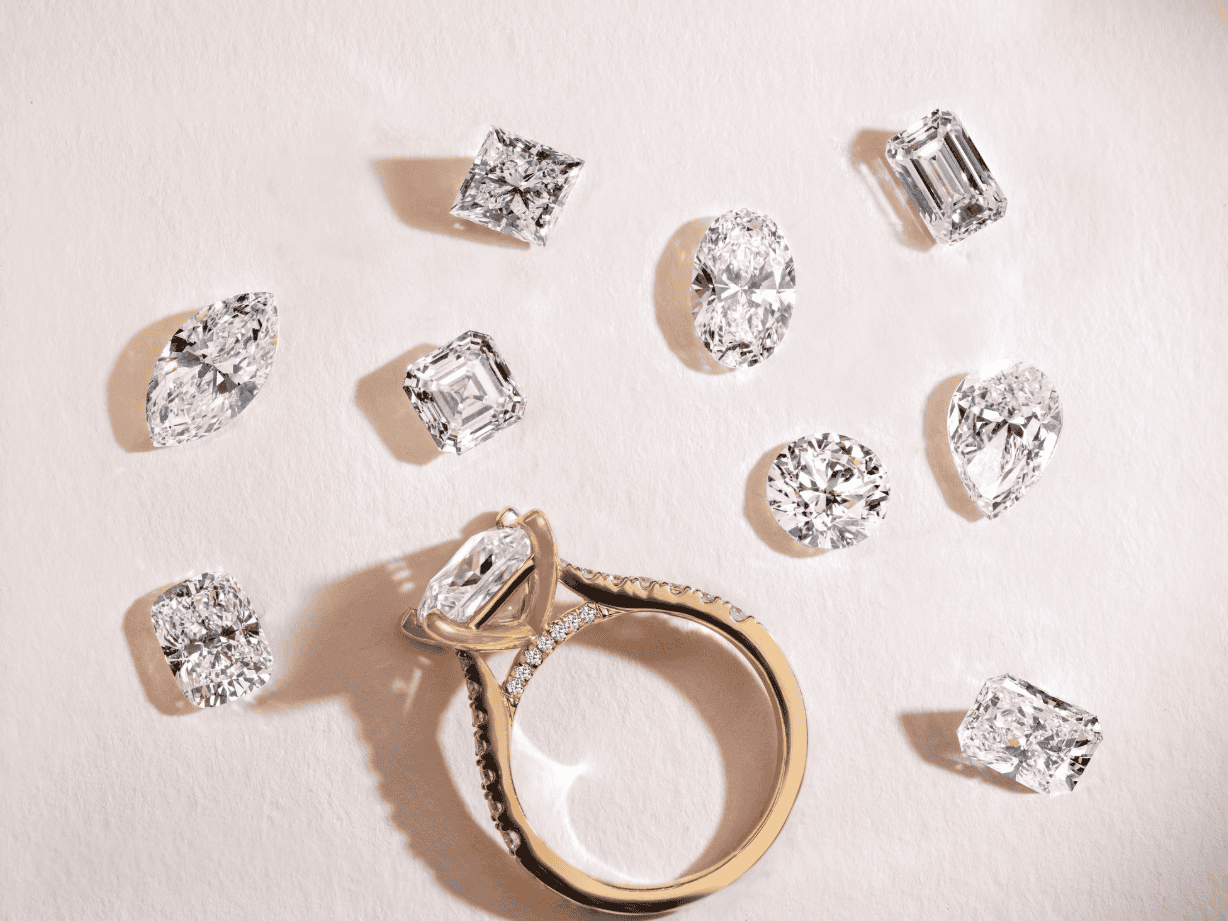
Shape is usually the first thing people notice. Round brilliants are the most popular for their sparkle, while ovals, cushions, pears, emeralds, and marquises appeal to anyone wanting something distinctive. See the most popular diamond shapes.
03
LAB-GROWN OR NATURAL
We offer both, and both are real diamonds with identical chemical and optical properties. Natural stones appeal to those who value rarity and heritage. Lab-grown offers the same beauty at a different price point. More on the tradition of natural diamonds.
For a comprehensive overview of everything to consider when selecting your diamond, visit our diamond education hub.
Think About Ring Style
Your engagement ring is made of two parts you choose separately: the setting, meaning the band and mounting, and the center stone. You can buy a complete ring where we have already paired a setting with a center diamond, or choose a ring setting and center diamond separately for a fully customized combination. Either path leads somewhere good, and the Luna pieces below are available whichever you choose.
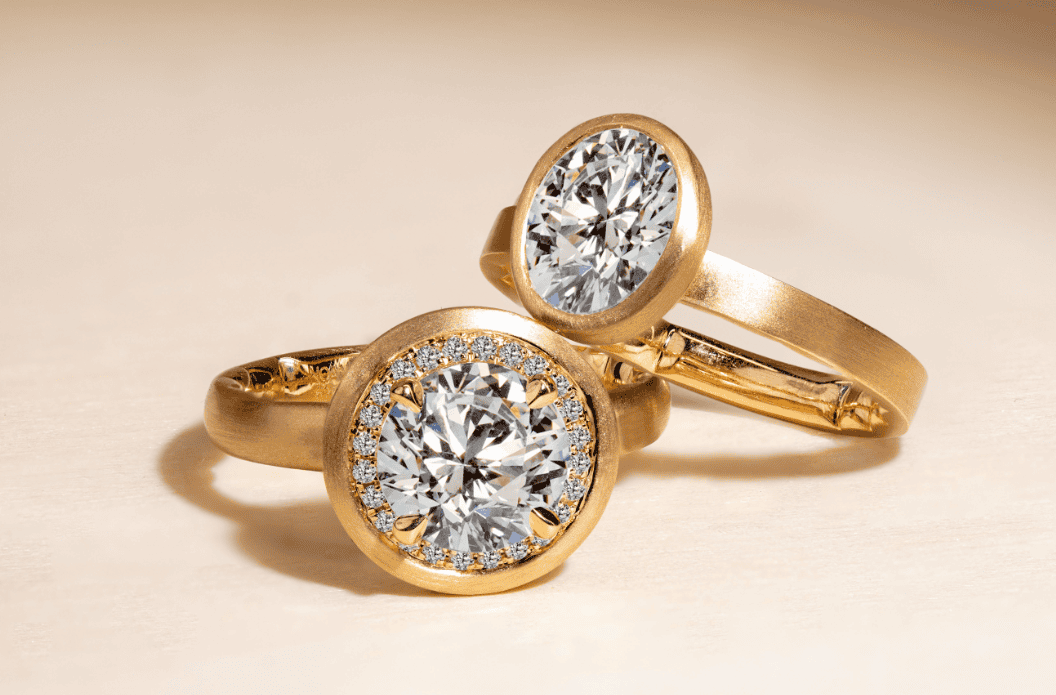
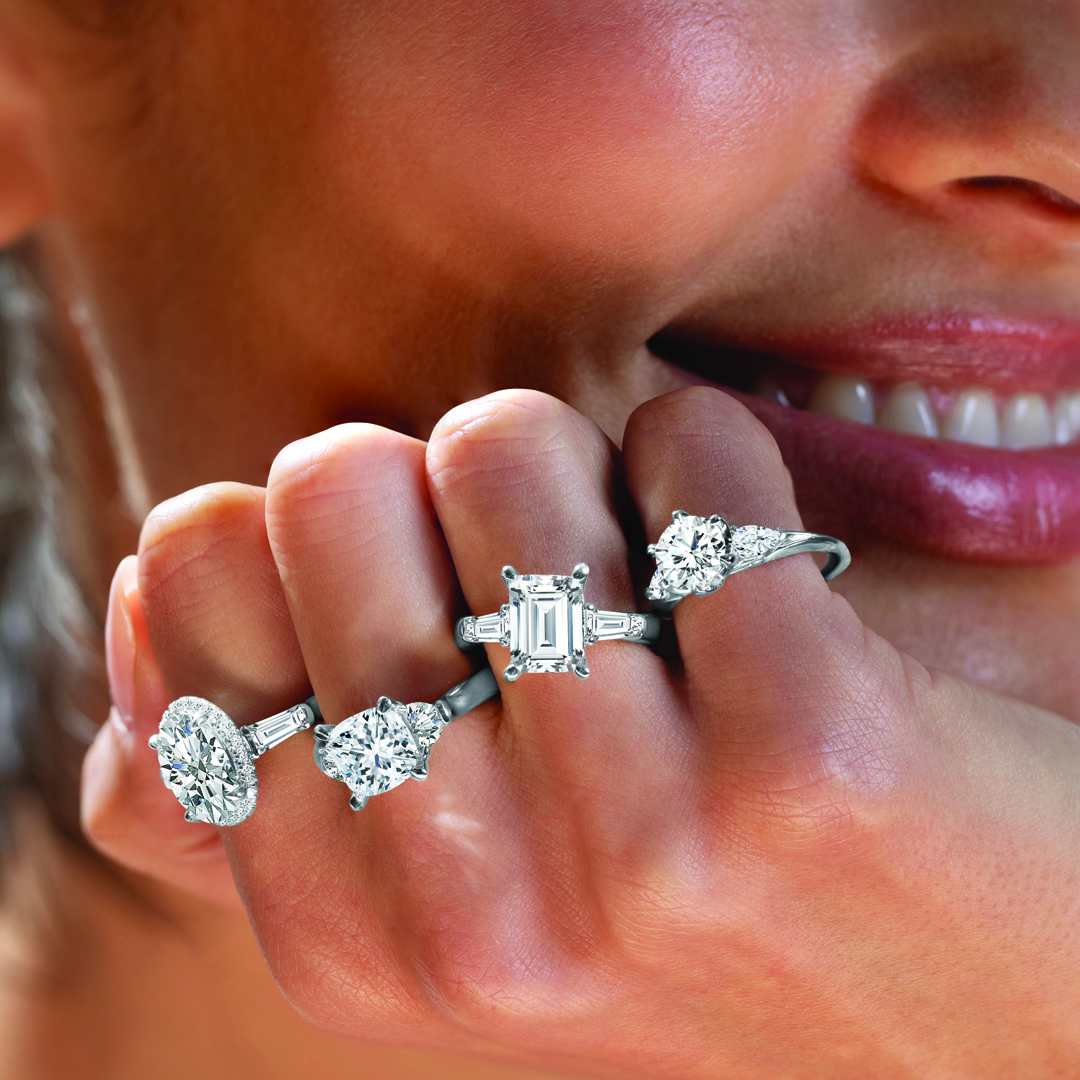
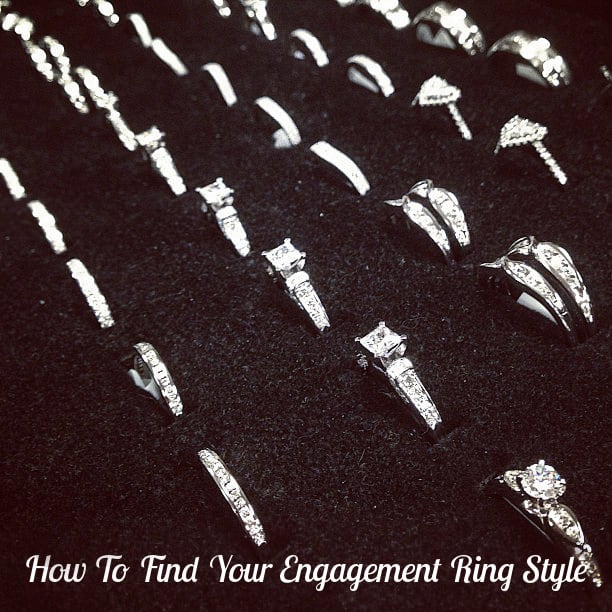
When it comes to setting styles, there are several directions to explore. A solitaire puts all the focus on the center diamond. A halo surrounds the center stone with smaller diamonds, which adds sparkle and makes the center read larger. A three-stone ring flanks the center with two side stones, often read as past, present, and future. There are also vintage-inspired designs. Here is one of each of the first three, so you can see how differently they carry the same idea.

14k White Gold Solitaire Engagement Ring, Oval Center 1/2 ct. tw.
- Solitaire. A complete ring with its oval center diamond included
- 14k white gold, rhodium plated, polished finish
- 1/2 ct. total weight, with nothing competing with the center stone

Henri Daussi 14k Rose Gold Natural Diamond Engagement Ring 1 ct. tw.
- Halo. A complete ring with a prong-set cushion cut center included
- 14k rose gold from Henri Daussi, polished finish
- 1 ct. total weight, the warmest metal of the three

LUXE Platinum Natural Diamond Engagement Ring Setting 5/8 ct. tw.
- Three-stone. A setting, so you choose the pear center separately
- Platinum from LUXE, polished, on a 2 mm shank
- 5/8 ct. tw. of side stones, the option that shows the two-step path in practice
Not sure whether your taste leans modern or vintage? Our engagement ring styles and types guide can help. And do not feel you need to settle on a style before visiting. Trying rings on is one of the most useful things you can do, and plenty of people are surprised by what they love in person versus on a screen.
Choose Your Center Stone
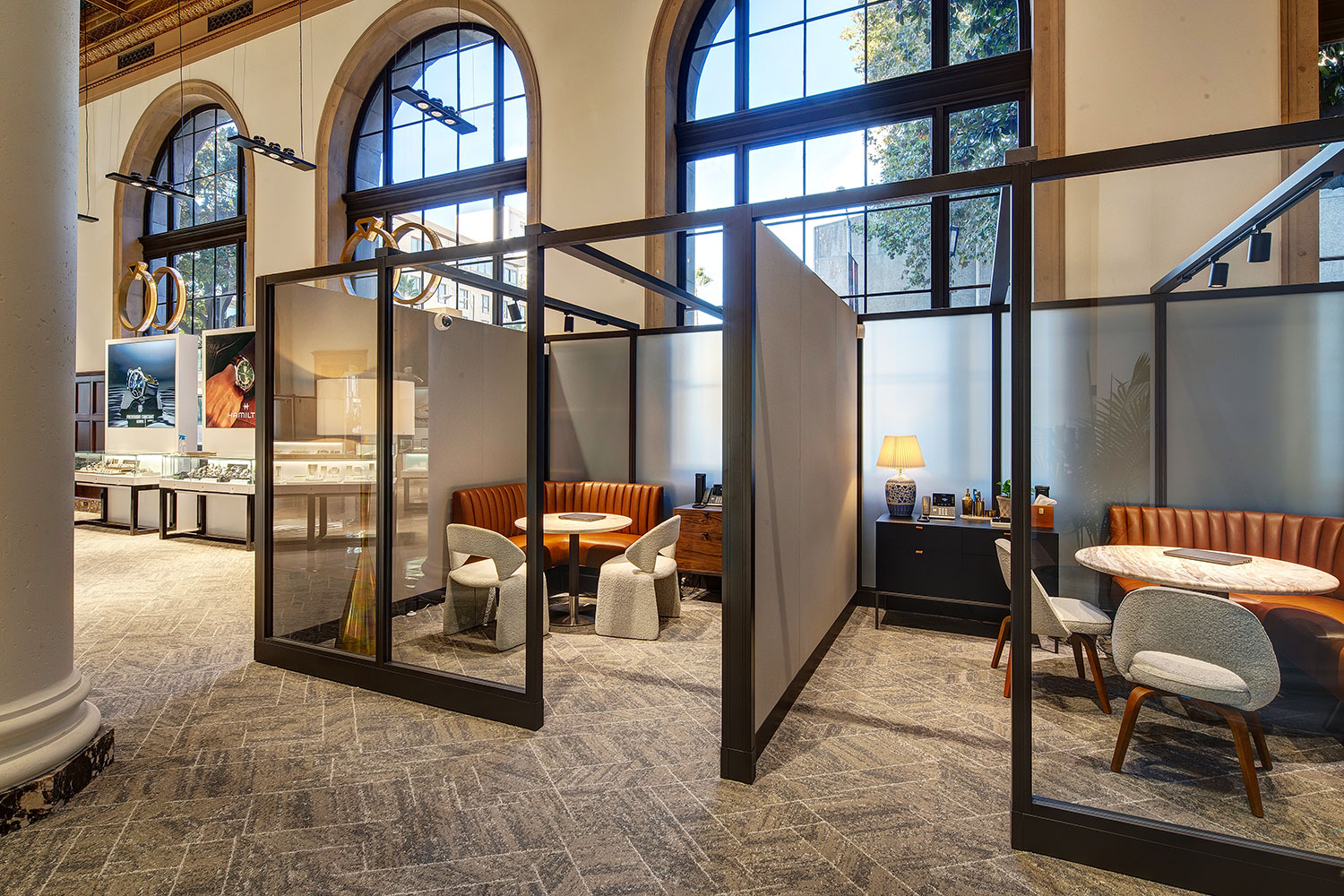
If you go the route of selecting a setting and diamond separately, the center stone is where the real decision sits. Only about one in ten diamonds meets our standards, because our buyers hand-select each one: two stones with identical grades on paper can look remarkably different in person. That is why we encourage you to compare diamonds under proper light in our VIP diamond viewing rooms. For a step-by-step walkthrough, read our guide on how to choose a center stone.
Visit Us, Even If You’re Not Ready to Buy
Here is something we tell everyone: you do not have to look at a ring on your first visit. You can walk in, sit down, ask every question on your mind, and leave without trying on a single thing. We are not going anywhere.
That said, the in-person part is where the value is. Photos and specs help, but seeing how a diamond catches light and how a ring sits on a hand changes the decision more than any spec sheet. Many couples arrive certain about one thing and leave drawn to something else entirely. Walk-ins are welcome at any of our showrooms across Arizona, California, Texas, and Washington, and you can book an appointment for dedicated time.
Give Yourself Enough Time
If you have a proposal date in mind, start the ring process a couple of months ahead. Ready-to-ship rings with a center stone already set can be in your hands quickly, but customizing a setting, selecting a loose diamond, or designing something from scratch with our in-house design studio all take longer. Starting early costs you nothing and removes the one pressure you do not want on this particular purchase.
Why Couples Choose Robbins Brothers
We know you have options, and we take that trust seriously. For more than 100 years we have been the place couples come to mark some of the most important moments of their lives. We are not a big-box retailer and we are not an anonymous website. We are employee owned, which means the person helping you has a stake in your leaving happy.
Every diamond we sell is hand-selected and backed by our best-in-class lifetime warranty, which covers cleaning, inspection, and repairs at any showroom. We carry both lab-grown and natural diamonds, a curated selection of top designers including Tacori, Verragio, and A.JAFFE, and a master jeweler in house for custom work.
Frequently Asked Questions
What’s the first step in buying an engagement ring?
Start with a conversation about what matters most, whether that is budget, style, diamond type, or all three. From there, a little research on diamond basics will help you feel prepared. Our engagement ring education center covers the fundamentals in one place.
Do I need to know my partner’s ring size to start shopping?
Not at all. Knowing the size is helpful but should not stop you from starting. Our consultants can estimate a size from other rings your partner wears, and most engagement rings can be resized after the proposal. Our ring size guide has tips for working it out discreetly.
Should I shop for an engagement ring alone or with my partner?
Either works. Many couples now shop together, which takes the guesswork out of style and means both people are happy with the result. Others prefer to keep it a surprise. Our consultants are experienced with both and will tailor the visit to whichever feels right.
How far in advance should I start the engagement ring process?
We recommend at least two months before a planned proposal, though there is no such thing as too early. Custom design and loose-diamond selection both add time, so the earlier you start the more freedom you keep.
What is the difference between a ring setting and a complete ring?
A complete ring arrives with its center diamond already set, so what you see is what you wear. A setting is sold without the center stone, which you then choose separately. The setting route takes longer and involves two decisions rather than one, but it gives you full control over the stone at the heart of the ring.
Can I change my mind about the setting after choosing a diamond?
Usually yes, and it is a common reason to buy the stone first. A loose diamond can go into any setting built for its shape and size, so choosing the diamond does not lock you into one design. It works less well in reverse, since a setting cut for a specific shape will not take a different one.
Do I need an appointment to start looking at engagement rings?
Walk-ins are always welcome at any of our showrooms. If you would like dedicated time with a consultant, we recommend booking a personalized consultation so we can give you our full attention and have options ready when you arrive.
Can I find both lab-grown and natural diamond engagement rings at Robbins Brothers?
Yes, we carry both and are happy to show you the differences in person. Our consultants can walk you through what each offers so you can choose the diamond type that fits your values and your budget.
Ready to Get Started?
The engagement ring process does not have to be stressful. It is one of the most exciting purchases you will ever make, and we are here to make sure it feels that way from the first step. Whether you are just starting to explore or you have a date circled on the calendar, we would love to help.
Or find a Robbins Brothers near you to explore our collection with expert guidance. You can also browse our Pinterest board for inspiration.
Recommended
We’re Engaged! Now What Do I Do?
The Engagement Eight: 8 things you should do right after the proposal: Update your Facebook status to “Engaged” and give your friends something really interesting to talk…
read more

A New Year Full of Sparkle: Ideas for the Perfect New Year’s Eve Proposal or Romantic Celebration of Your Year Together
Planning a special New Year’s Eve to celebrate the joy of the year you have spent with your partner? Whether…
read more
Find Out Your Engagement Ring Style
You have decided to shop for an engagement ring. Congratulations. Then you open the first case and there are two…
read more