Pearl Jewelry: Buying Guide & Styling Tips
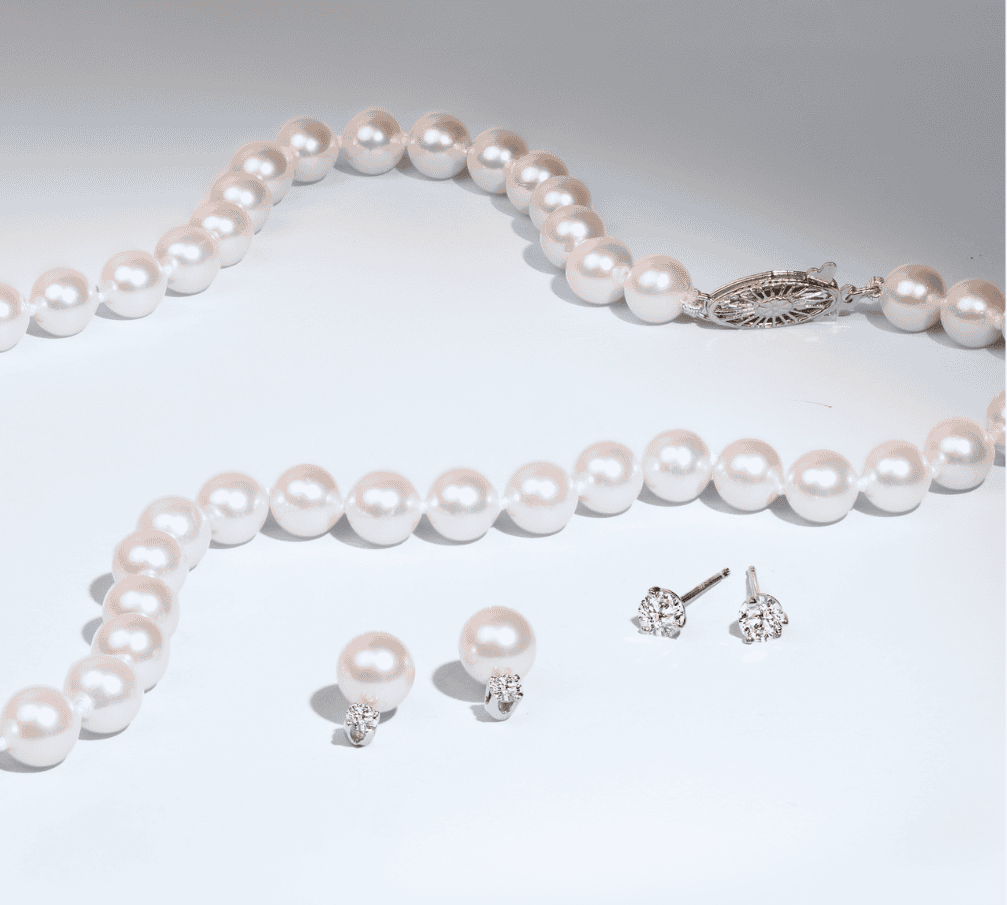


Pearls are the rare gem that grows organically inside a living mollusk rather than being mined from the earth, and that soft, luminous glow is exactly why they have stayed in love for generations. They move easily from a casual weekend to a black-tie evening, which makes them one of the most versatile pieces you can own. We carry cultured pearl jewelry from designers such as Verragio and Doves, alongside classic strands, studs, and modern station styles.
This guide walks you through the four main pearl types, how to read pearl quality, the metals that flatter them, and the ways we love to wear every form pearls come in today. Whether you are buying your first strand or adding to a collection, our experts are here to help you find the right piece.
What Sets a Pearl Apart From Every Other Gem
01
GROWN, NOT CUT
Every other gem in the case was cut and polished into its shape. A pearl arrives finished, so the surface you are looking at is the surface it grew. There is no faceting to hide behind, which is why surface quality carries more weight here than it would on a faceted stone.
02
SOFT ENOUGH TO NEED A RULE
Pearls are softer than nearly anything you would wear beside them, so the order you put jewelry on genuinely matters, and a pearl strand should never share a drawer with a diamond tennis bracelet.
03
NO TWO ARE ALIKE
Because each pearl grows on its own, assembling a strand where every pearl matches its neighbors in size, color, and glow is slow, skilled work. That labor, not the raw material, is most of what separates an ordinary strand from a fine one.
Are Pearls in Style?
Very much so. Pearl jewelry has moved well beyond the single traditional strand into bold, sculptural designs, mixed metals, and irregular baroque shapes that feel fresh and personal. Runway collections from houses like Chanel, Givenchy, and Simone Rocha have kept pearls firmly in the fashion conversation, and guests increasingly want pieces with an organic origin and a one-of-a-kind character. The result is a gem that reads as classic and contemporary at the same time.
What has changed in the case is the range. A generation ago a pearl purchase meant choosing a strand length and a clasp. Now the same guest is deciding between a station necklace, a single baroque drop, and a pair of studs worn with everything, and often buying the one that fits a Tuesday rather than the one that fits a wedding.
The Four Types of Cultured Pearls
Nearly all pearls sold today are cultured, meaning they grow with a gentle assist from a pearl farmer. Four varieties account for most fine pearl jewelry, and each has its own personality. You can read more about how the GIA classifies cultured pearl types as you compare them.
Akoya pearls
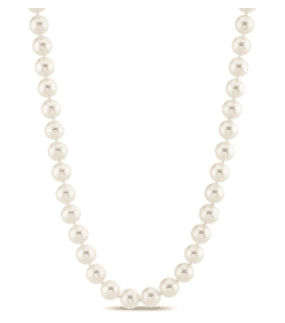
The classic white saltwater pearl, cultivated largely in Japan and prized for near-perfect roundness and a bright, mirror-like luster. Usually 6 to 9mm, Akoya pearls are the foundation of the traditional pearl strand.
Freshwater pearls
Grown mostly in China, freshwater pearls come in the widest range of colors and shapes and offer the most accessible entry point into fine pearls, which makes them a favorite for everyday designs and layering.
South Sea pearls
The largest and most valuable pearls, appearing in soft white and rich golden hues. Their size and satiny glow make them the natural choice for luxury statement pieces.
Tahitian pearls
Naturally dark pearls with dramatic peacock, green, and purple overtones. Their exotic color makes them ideal for contemporary, high-impact designs.
How to Judge Pearl Quality
Pearls are graded on a set of value factors rather than the four Cs used for diamonds. The GIA seven pearl value factors give you a reliable framework, and here is what each one means when you have a strand in hand.
- Luster: the brightness and sharpness of reflected light. This is the single most important factor and what gives a pearl its glow.
- Surface quality: graded from clean to heavily spotted, which affects both beauty and durability.
- Shape: round is the most prized, while button, drop, and baroque shapes bring character to modern designs.
- Color: a blend of body color, overtone, and orient, the subtle iridescence you see across the surface.
- Size: measured in millimeters. Larger pearls are generally rarer and more valuable.
- Nacre thickness: the depth of the pearl coating, which drives both durability and that deep inner glow.
- Matching: how consistently pearls are paired in a strand or a set of earrings.
Choosing a Metal for Pearl Jewelry
The metal you set pearls in should flatter both the pearl and your skin. If you have cool undertones, white gold and platinum tend to look crisp and bright against white pearls. Warm undertones glow alongside yellow gold, which is also the traditional partner for golden South Sea pearls. Rose gold flatters almost every skin tone with a soft, romantic finish, and neutral undertones can wear either warm or cool metals with ease. Many of our two-tone pieces combine yellow and white gold so you never have to choose.
Setting style matters as much as color here. A pearl is drilled and mounted on a post or a cup rather than gripped by prongs, so the metal touches the pearl directly and any roughness shows. That is worth asking about when you compare two pieces that look alike in a photograph.
How to Style Pearl Jewelry
Everyday wear
Simple studs or a single pendant slip under any outfit. Smaller sizes in the 6 to 8mm range read as quietly elegant, and a station necklace offers a minimalist, modern take on the classic strand.
The office
A refined strand or a pair of studs projects quiet confidence. White and cream pearls suit traditional settings, while soft pink or golden tones work beautifully in more expressive workplaces.
Evening and special occasions
This is the moment for statement pieces: multi-strand necklaces, dramatic drops, and pearl-and-diamond combinations that catch the light. Let the jewelry be the focal point and keep the rest of the look clean.
Layering and mixing
Mix pearl strands with delicate gold chains, combine different pearl sizes and shapes, and stack pearl bracelets with slim bangles. The goal is balance between what sits at your neck and what sits at your ears and wrist.
Pearl Necklaces and Pendants
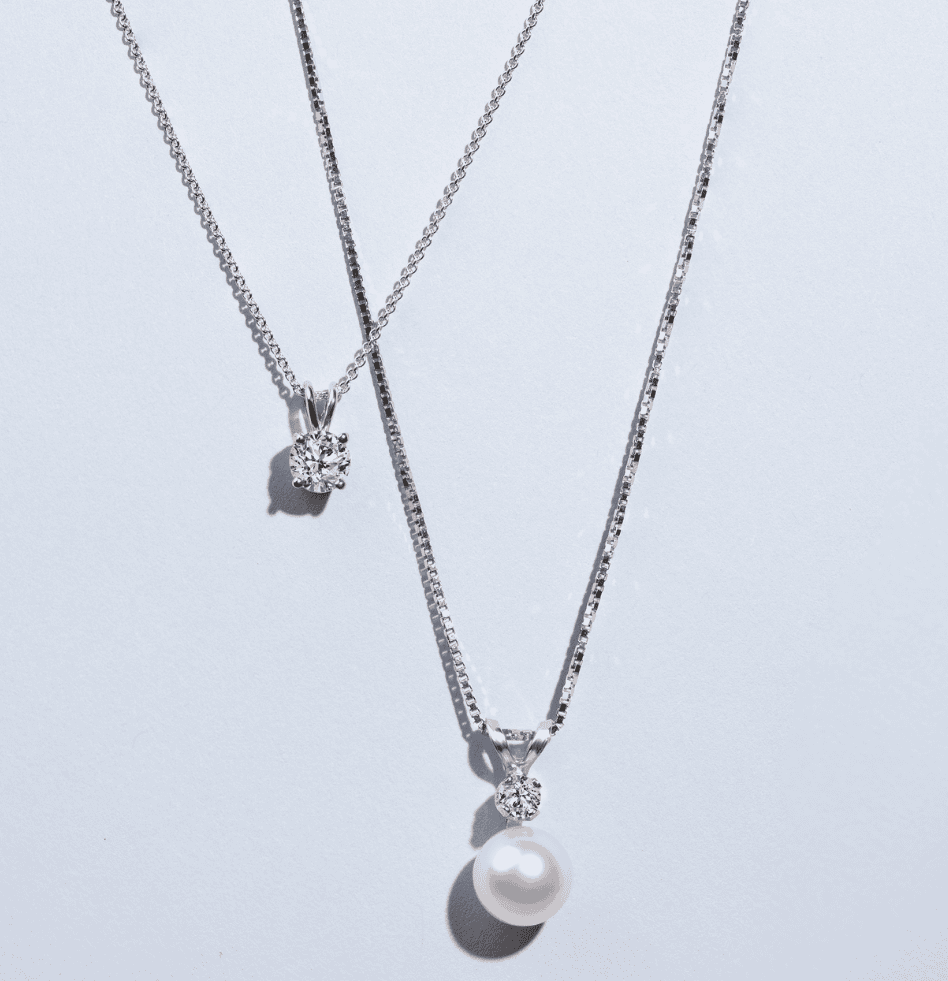
Pearl necklaces and pendants run from a single solitaire drop to a full multi-strand statement. Classic lengths give you a helpful starting point: choker sits at 14 to 16 inches, princess at 17 to 19 inches, matinee at 20 to 24 inches, and opera at 28 to 35 inches. Contemporary designs often pair pearls with diamonds for extra sparkle.

Verragio 18k Yellow Gold Akoya Pearl and Natural Diamond Necklace
- 18k yellow gold with a milgrain finish, signed by Verragio
- Akoya pearl framed by natural diamonds, 1/2 ct. tw.
- 18-inch chain with a toggle clasp

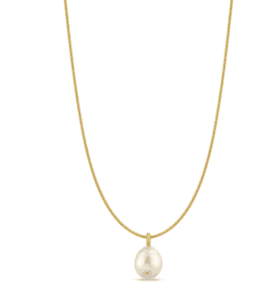
18k Yellow Gold South Sea Drop Shaped Pearl Pendant
- 18k yellow gold with a matte finish
- Drop-shaped South Sea cultured pearl
- 16-inch chain with a push-lock clasp

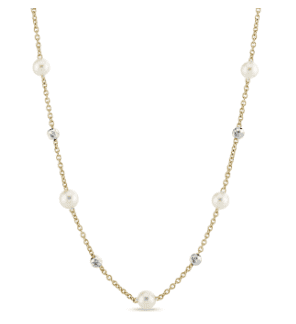
14k Yellow Gold and 14k White Gold 19 Inch Japanese Cultured Pearl Station Necklace
- Japanese cultured pearls spaced as stations along the chain
- 14k yellow gold and 14k white gold together, so it bridges either metal
- 19-inch length, the modern alternative to a full strand
Pearl Earrings
Pearl earrings may be the most versatile pearl jewelry you can own. Classic studs carry you through any occasion, while drop and dangle styles add movement and a little drama for evening.

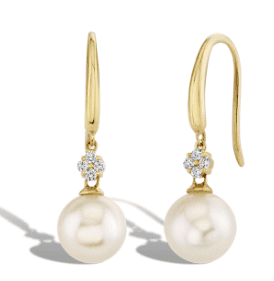
14k Yellow Gold Cultured Pearl and Natural Diamond Dangle Earrings
- 14k yellow gold with a polished finish
- Cultured pearls with natural diamonds, 1/8 ct. tw.
- Dangle style on fish-hook backs, for movement

14k Yellow Gold Japanese Cultured Pearl and Natural Diamond Earrings
- 14k yellow gold
- Japanese cultured pearls with natural diamonds, 1/5 ct. tw.
- The dressed-up version of a classic pearl stud

Cultured 14k White Gold Cultured Pearl Earrings
- 14k white gold
- Cultured pearls with nothing else competing for attention
- The pair to reach for when the rest of the look is doing the talking
Pearl Bracelets
Pearl bracelets range from a classic beaded strand to a modern station design that spaces pearls along a fine chain. Mixed metals bridge whatever the rest of your jewelry happens to be, so you are not committing to gold or to silver.

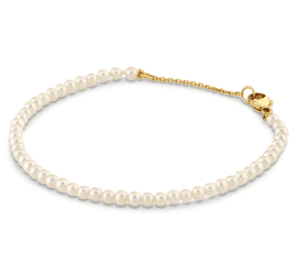
Cultured 14k Yellow Gold Japanese Cultured Pearl Bracelet
- A full strand of Japanese cultured pearls
- 14k yellow gold clasp
- The classic form, worn on the wrist instead of the neck

14k Yellow Gold and 14k White Gold 8 Inch Japanese Cultured Pearl Station Bracelet
- Japanese cultured pearls spaced along a two-tone chain
- 14k yellow gold and 14k white gold
- 8-inch length, easy to stack with slim bangles

Shy Creation 14k Yellow Gold Mother of Pearl Heart Natural Diamond Bracelet
- 14k yellow gold, signed by Shy Creation
- Mother-of-pearl heart outlined in natural diamonds
- Mother of pearl is the same nacre, worn flat instead of round
Pearl Rings
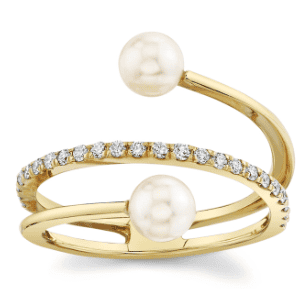
A pearl ring is the least expected way to wear the gem, and the most demanding one. A ring takes more knocks than anything else you wear, and a pearl is softer than the stones it sits beside, so the setting has to hold it low and hold it securely. Set with a cultured pearl and framed with diamonds, it reads softer than a stone ring and sits comfortably against a wedding band.

14k Yellow Gold Cultured Pearl and Natural Diamond Ring
- 14k yellow gold with a polished finish
- Cultured pearl framed by natural diamonds, 1/4 ct. tw.
- Low enough on the finger to wear beside a band
Caring for Your Pearls
Put your pearls on last, after makeup, hairspray, and perfume, and take them off first at the end of the day. Wipe them with a soft, slightly damp cloth after each wear, then store them in a soft pouch or a lined box away from harder jewelry that could scratch them.
- Keep pearls away from chlorine, excessive heat, and extreme temperature swings.
- Wear them often. The natural moisture from your skin actually helps maintain their luster.
- Have frequently worn strands restrung every year or two, ideally with a knot between each pearl so a broken thread never means a lost pearl.
Every piece we sell is backed by our lifetime warranty, and you can bring your pearls into any of our showrooms for complimentary cleaning and inspection whenever they need it.
The Robbins Brothers Difference
For more than 100 years, we have guided guests through some of life’s most meaningful jewelry purchases, and pearls have been part of that from the beginning. Our consultants will bring several pieces out at once and put them side by side, because luster is the one quality that photographs badly and settles instantly in person.
You will find us at our showrooms across California, Arizona, Texas, and Washington, where our in-house master jeweler handles restringing, resetting, and repair. That matters more with pearls than with most gems, since a strand that gets worn often is a strand that will eventually need restringing.
Frequently Asked Questions
Are pearls still in style?
Yes, and demand has broadened rather than faded. Beyond the classic strand, guests are gravitating toward baroque shapes, station necklaces, and pearls mixed in with gold and diamonds. Runway houses have kept them in the conversation, and the organic origin is a large part of the appeal.
What types of cultured pearls does Robbins Brothers carry?
We carry Akoya, freshwater, South Sea, and Tahitian cultured pearls, each with its own character, in necklaces and pendants, earrings, bracelets, and rings.
How do I know if a pearl is good quality?
Start with luster, the mirror-like glow that separates a fine pearl from an ordinary one, then look at surface cleanliness and how evenly matched the pearls are to each other. Nacre thickness is what you cannot see and what decides how the pearl ages, which is the part worth asking a consultant about.
Is pearl a birthstone?
Pearl is one of the three birthstones for June, alongside alexandrite and moonstone, which makes a pearl piece a natural choice for a June birthday.
How should I care for my pearl jewelry?
Put pearls on last, wipe them gently after wearing, and store them separately from harder stones. The one thing guests are usually surprised by is that a strand worn often should be restrung every year or two, and that leaving pearls in a safe for years does them no favors.
Do I need an appointment to shop for pearl jewelry?
Walk-ins are always welcome, but booking a personalized consultation gives you dedicated time with an expert who can bring several strands out at once, which is the only way to see how luster differs between them.
Can you create a custom pearl piece?
Absolutely. Our in-house design studio and master jeweler can help you design something new, or reset pearls you already own into a piece you will actually wear.
Or find a Robbins Brothers near you to explore our pearl collection in person. You can also browse our Pinterest board for inspiration.
Recommended
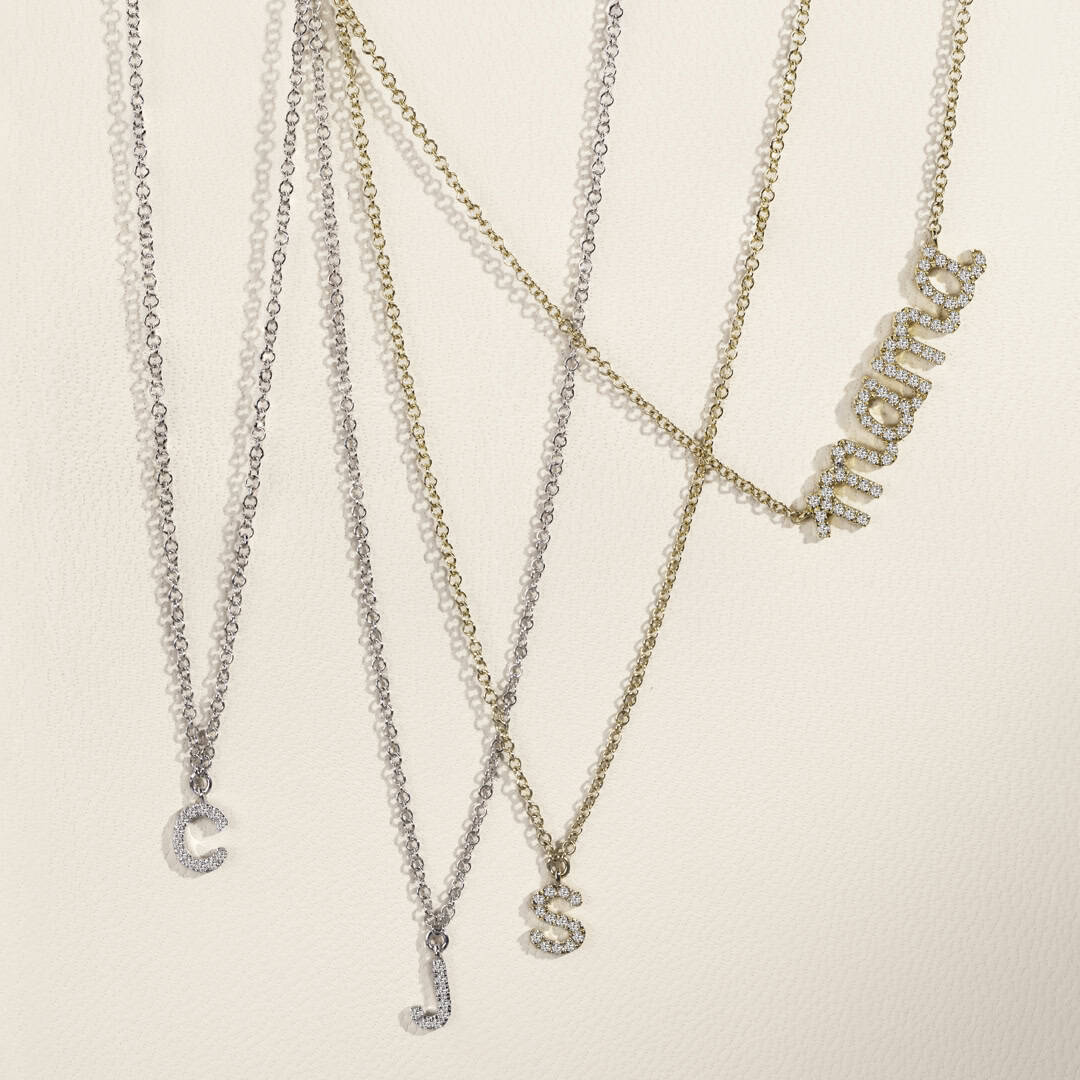
Give Mom The Gift of Sparkle This Mother’s Day: A Pendant or Ring Stack Is Sure To Brighten Her Day!
Mother’s Day has a habit of turning into flowers and a card, which is fine, and forgotten by June. A…
read more
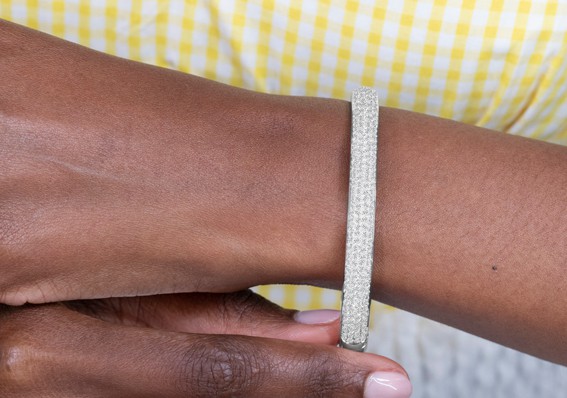
How to Choose & Style Bangle Bracelets
A bangle is one of the easiest ways to add polish to any look, from a weekday desk to a…
read more
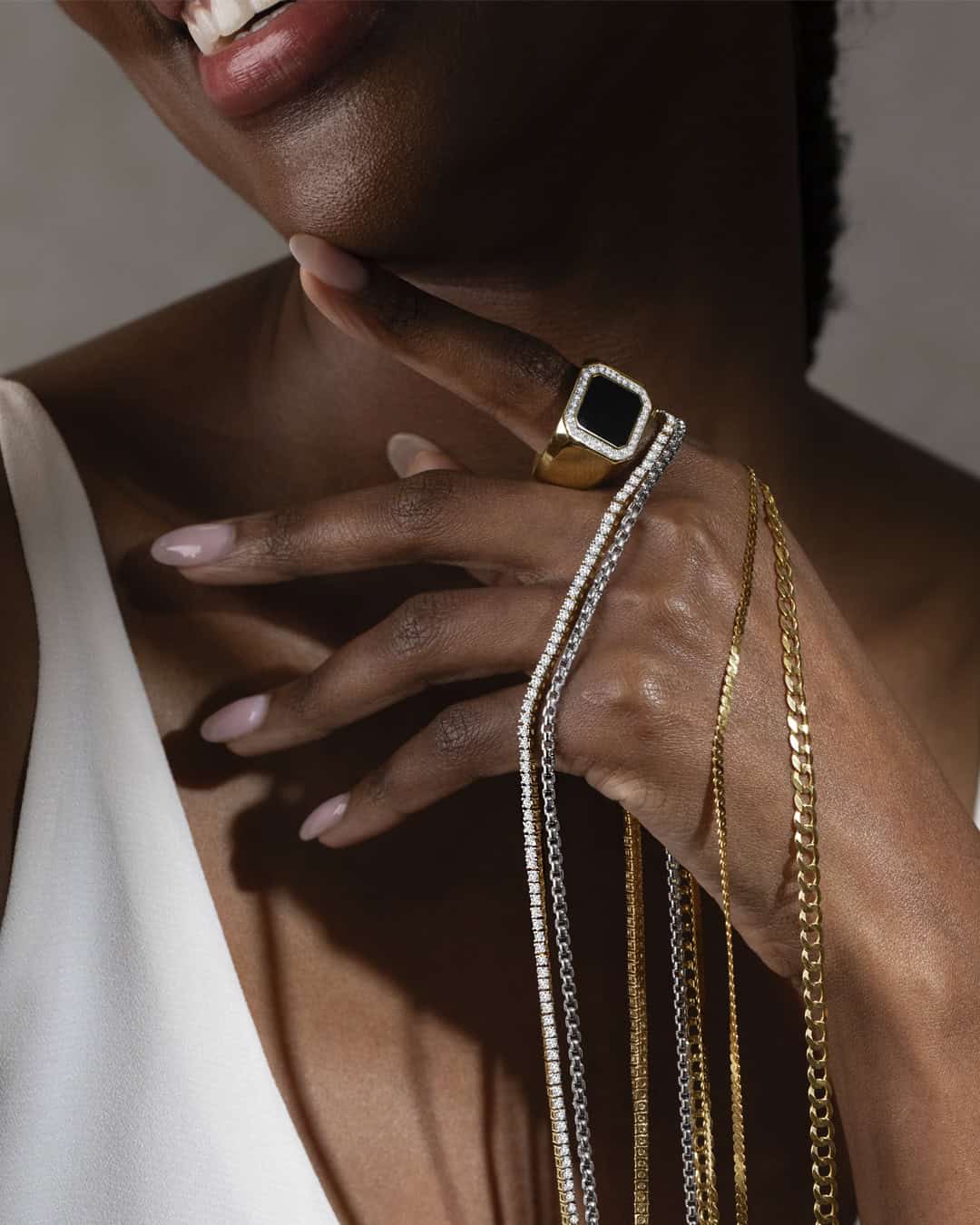
Mixing Metals in Bracelet and Necklace Layered Stacks
Mixing metals can elevate your look and help you create an eye-catching style that’s uniquely you.