Home » Engagement & Wedding Rings » Wedding Bands
Creating the Perfect Wedding Ring Stack
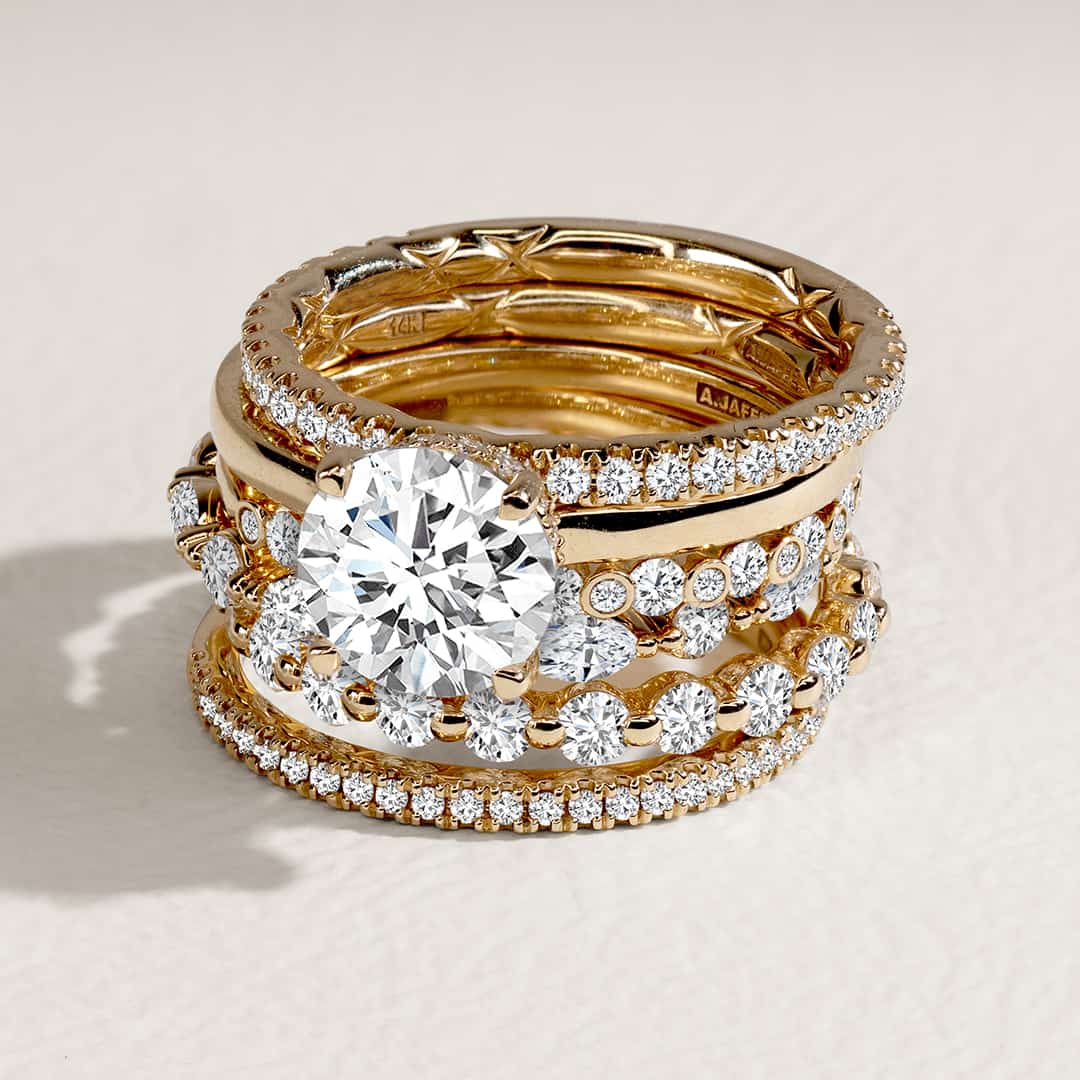


A wedding ring stack is one of the few pieces of jewelry you build rather than buy. It starts with an engagement ring, gains a wedding band, and then grows with anniversaries, milestones, and the occasional ring you bought yourself. The pleasure is in how the pieces sit together, which is worth thinking about before the second ring arrives rather than after.
Below are seven stacks we keep coming back to, from the most classic to the most colorful, each with the three rings that make it work. Use them as starting points rather than shopping lists, and see our guide to wedding band styles if you are still deciding on the band itself.
Three Things That Make a Stack Work
01
MATCH THE WIDTHS
Rings of similar width read as a set; a sharp jump in width reads as an accident. The measurement to ask for is the shank width in millimetres, and a difference of half a millimetre is visible on the hand.
02
DECIDE ON A PROFILE
Flat bands sit tight against each other and against an engagement ring. Rounded bands leave small gaps that catch light, which can be the point. Mixing the two is where stacks start to look unplanned.
03
PLAN FOR SOLDERING
Rings worn together will rub. Some couples solder the engagement ring and band into one unit for comfort and wear; others keep them separate to restack them differently. It is easier to decide before the metal wears than after.
A Classic Stack to Start
The simplest stack is one designer, one metal, three rings. Keeping the engagement ring and both bands within the same family means the widths and the finish already agree, so nothing has to be negotiated. This A.JAFFE trio in 14k yellow gold is that idea in its plainest form, and it is the stack we most often suggest to someone who wants to get it right the first time.

A.JAFFE 14K Yellow Gold Natural Diamond Engagement Ring Setting .07 ct. tw.
- A setting for a round center stone, sold without the diamond
- 14k yellow gold on a 1.8 mm shank
- The engagement ring of the set, sold as a setting for a round center stone

A.JAFFE 14K Yellow Gold Natural Diamond Wedding Band 5/8 ct. tw.
- Set with 5/8 ct. tw. of diamonds
- 14k yellow gold measuring 1.9 mm across
- Sits flush on one side, at almost exactly the setting’s width

A.JAFFE 14K Yellow Gold Natural Diamond Wedding Band 1 ct. tw.
- Carries 1 ct. tw. across the band
- 14k yellow gold at 1.7 mm
- The heavier of the two bands, meant for the outside of the stack
Engagement Ring with Bands on Either Side
Flanking the engagement ring with a band on each side frames the center stone and balances the hand. The trick is asymmetry in the bands themselves: one narrow, one wider, so the eye still lands on the ring in the middle. Here a round solitaire sits between a fine 2 mm band and a brighter 2.4 mm one.

14K White Gold Round 1 ct. tw. Solitaire Natural Diamond Engagement Ring
- Round center stone, 1 ct. tw.
- 14k white gold
- A round solitaire that arrives with the center stone already set

14K White Gold Natural Diamond Wedding Band 1/3 ct. tw.
- 1/3 ct. tw., set all the way along the top
- Rhodium plated 14k white gold in a 2 mm profile
- The narrowest band here at 2 mm, so it reads as a fine outline

14K White Gold Natural Diamond Wedding Band 3/4 ct. tw.
- A 3/4 ct. tw. line of natural diamonds
- Rhodium plated 14k white gold, 2.4 mm wide
- Wider and brighter, to balance the pair on the other side
Nostalgic and Modern
Vintage detailing and clean modern lines are usually treated as opposites, but a stack is the one place they can share a finger. Milgrain beading against a plain polished band gives the eye two textures to move between. This group pairs a milgrained Verragio band, catalogued as a vintage design, with two Gabriel & Co. bands, one of them a modern design.

Verragio 14K White Gold Natural Diamond Wedding Band 1/5 ct. tw.
- 1/5 ct. tw. of natural diamonds
- Rhodium plated 14k white gold on a 2.4 mm shank
- Milgrain edging and a vintage design style, despite the modern company it keeps

Gabriel & Co. 14K White Gold Natural Diamond Wedding Band 3/8 ct. tw.
- Set with 3/8 ct. tw. of diamonds
- Rhodium plated 14k white gold measuring 2.1 mm across
- Catalogued by Gabriel & Co. as a modern design, and the wider of their two

Gabriel & Co. 14K White Gold Natural Diamond Wedding Band 1/5 ct. tw.
- Carries 1/5 ct. tw. across the band
- Rhodium plated 14k white gold at 1.5 mm
- The slimmest band in this trio at 1.5 mm, for a quiet third line
Mixing Metals
Mixing white, yellow, and rose gold is no longer a rule you are breaking. It works best when the widths stay close, so the color does the talking rather than the proportions. These three sit within a fifth of a millimetre of each other, which is why the effect reads as deliberate.

14K White Gold Natural Diamond Wedding Band 1/8 ct. tw.
- Diamonds totalling 1/8 ct. tw.
- Rhodium plated 14k white gold, 1.7 mm across the finger
- Milgrain detail in white gold, catalogued as a vintage design

14K Yellow Gold Natural Diamond Wedding Band 1/2 ct. tw.
- 1/2 ct. tw., set all the way along the top
- 14k yellow gold in a 2 mm profile
- Yellow gold, carrying the most diamond weight of the three

14K Rose Gold Natural Diamond Wedding Band 1/8 ct. tw.
- A 1/8 ct. tw. line of natural diamonds
- 14k rose gold, 1.9 mm wide
- Rose gold, the warmest tone in the group
Mixing Bold and Subtle
A stack does not need every ring to compete. Pairing a wide plain band with narrower diamond bands gives the group a spine, and the plain metal becomes a rest for the eye between the sparkle. Here a 6 mm yellow gold band anchors two much finer rings.

14K Yellow Gold Natural Diamond Wedding Band 1/4 ct. tw.
- 1/4 ct. tw. of natural diamonds
- 14k yellow gold on a 1.8 mm shank
- Yellow gold at a modest 1/4 ct. tw., the subtle half of the pairing

14K Yellow Gold 6 mm Wedding Band
- A plain band, with no stones set at all
- 14k yellow gold measuring 6 mm across
- A plain 6 mm band with no stones at all, and the boldest shape here

Henri Daussi 18K Rose Gold Natural Diamond Wedding Band 1/5 ct. tw.
- Carries 1/5 ct. tw. across the band
- 18k rose gold
- Henri Daussi in 18k rose gold, with a heritage-leaning look
Symmetrical Beauty
Graduated widths in a single metal are the most formal way to stack. Wearing the widest ring in the middle with narrower bands on either side produces a shape that looks intentional from across a room. These three Memoire platinum bands step from 1.9 mm to 2.9 mm to 4.3 mm, which is the whole idea in three numbers.

Memoire Platinum Natural Diamond Wedding Band 1/4 ct. tw.
- Diamonds totalling 1/4 ct. tw.
- Platinum, 1.9 mm across the finger
- The narrowest Memoire band at 1.9 mm

Memoire Platinum Natural Diamond Wedding Band 3/4 ct. tw.
- 3/4 ct. tw., set all the way along the top
- Platinum in a 2.9 mm profile
- The middle width at 2.9 mm, and the natural center of a symmetrical set

Memoire Platinum Natural Diamond Wedding Band 2 ct. tw.
- A 2 ct. tw. line of natural diamonds
- Platinum, 4.3 mm wide
- The widest at 4.3 mm, and the one that anchors the group
Add Pops of Color
Colored stones are the easiest way to make a stack yours, and the most personal, since a birthstone or an anniversary stone carries its own reason. Set among diamond bands, a single colored band reads as an accent rather than a departure. Browse more in our colored gemstone collection.

14K White Gold Blue Sapphire Natural Diamond Wedding Band .08 ct. tw.
- Blue sapphire with natural diamonds, .08 ct. tw.
- Rhodium plated 14k white gold on a 1.8 mm shank
- Milgrain edging and a vintage design style carry the setting

14K White Gold Ruby and Natural Diamond Wedding Band 1/10 ct. tw.
- Set with 1/10 ct. tw. of diamonds
- Rhodium plated 14k white gold measuring 1.8 mm across
- Ruby set with diamond accents, the warmest color of the three

Tacori 18K Rose Gold Pink Sapphire Wedding Band
- A pink sapphire band, with the color doing all the work
- 18k rose gold at 2 mm
- Tacori, edged with milgrain, and the only 18k piece in this trio
Build Your Stack With Us
A stack is easier to plan on a hand than on a screen. Bring what you already wear, and our jewelry consultants will pull bands that match its width and profile so you can see the group together rather than imagine it. If you are buying the engagement ring first, say so, because choosing an engagement ring with the future stack in mind saves compromises later.
The Robbins Brothers Difference
We have helped couples build these stacks for more than 100 years, one ring at a time, which is the part that matters: the band you add at a tenth anniversary has to work with a ring bought a decade earlier. Our jewelry consultants keep that in view, and our master jeweler works in house for the sizing, soldering, and refinishing a growing stack eventually needs.
Only 1 in 10 diamonds meets our standards, and you can compare stones side by side under ideal lighting in our VIP diamond viewing rooms. We carry both lab-grown and natural diamonds and will explain the trade-offs without steering you. Every purchase is backed by our best-in-class lifetime warranty covering cleaning, inspection, and repairs at any of our showrooms across California, Arizona, Texas, and Washington.
Frequently Asked Questions
How many rings should a wedding ring stack have?
There is no correct number. Three is common because it balances either side of an engagement ring, but plenty of stacks are two rings and plenty grow to five. Add rings as there are reasons to, and stop when the hand feels crowded to you rather than to anyone else.
Should all the rings in a stack be the same metal?
They do not need to be. Mixing white, yellow, and rose gold is a deliberate look, and it holds together best when the band widths stay close. If you would rather not mix, matching the metal of the engagement ring is the safest starting point for every band that follows.
Will stacked rings damage each other?
Rings worn tightly together will rub over years, and softer metals show it first. It is normal wear rather than damage, and it is why we recommend an annual inspection. Our master jeweler can refinish worn edges and rebuild a thinning shank long before it becomes urgent.
Should I solder my engagement ring and wedding band together?
It is a preference, not a rule. Soldering stops the rings spinning and rubbing and makes them more comfortable for daily wear. Keeping them separate lets you restack or wear the band alone. Talk it through with a consultant before you commit, because unsoldering is possible but not free.
What is the difference between an engagement ring setting and a complete ring?
A setting is the mounting sold without a center stone, so you choose the diamond separately and see the two together before deciding. A complete ring arrives with the stone already set. Both appear in the stacks above, and a consultant will tell you which you are looking at.
How do I add to a wedding ring stack years later?
Bring the rings you already wear. Matching a new band to an existing one is a question of width, profile, and finish, and those are far easier to match in person than from a photograph. If the original designer still produces the line, we can often source a companion band directly.
Can I use anniversary or birthstone rings in a stack?
Yes, and it is one of the better reasons to build one. A colored band among diamond bands reads as an accent, and each addition carries a date. Harder stones such as sapphire and ruby handle daily stacking better than softer ones like emerald or opal.
Do I need an appointment to shop for wedding bands?
Walk-ins are always welcome, though an appointment means dedicated time with a consultant who can prepare. Wear or bring your engagement ring, and book ahead if you want to try a lot of bands against it in one visit.
Or find a Robbins Brothers near you to build your stack in person. You can also browse our Pinterest board for inspiration.
Recommended
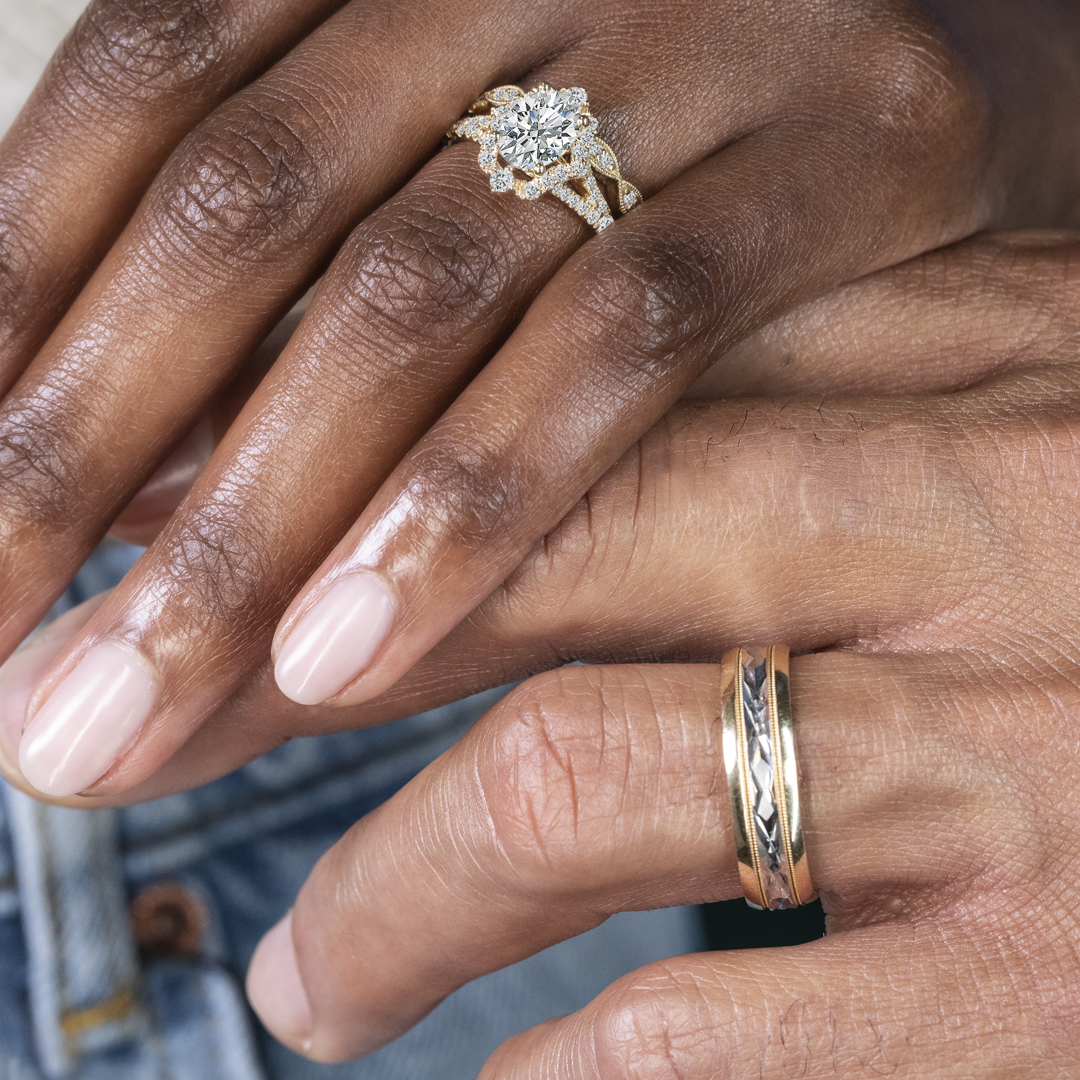
The Best Place to Buy Engagement Rings and Wedding Bands: How Robbins Brothers Prioritizes Customer Service
An engagement ring and a wedding band are among the most meaningful purchases you will ever make. They carry real…
read more
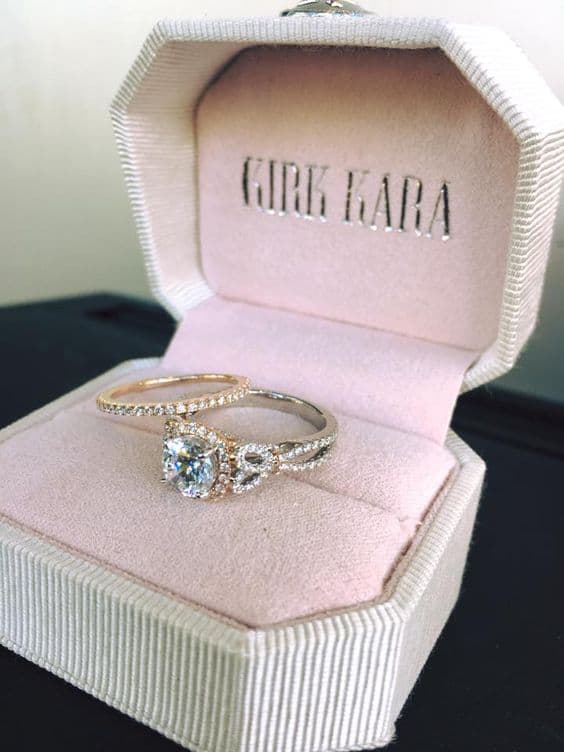
Most Popular Wedding Bands on Pinterest
It’s no secret that Pinterest is the go-to website for all things wedding – including RINGS. From vintage touches to modern…
read more
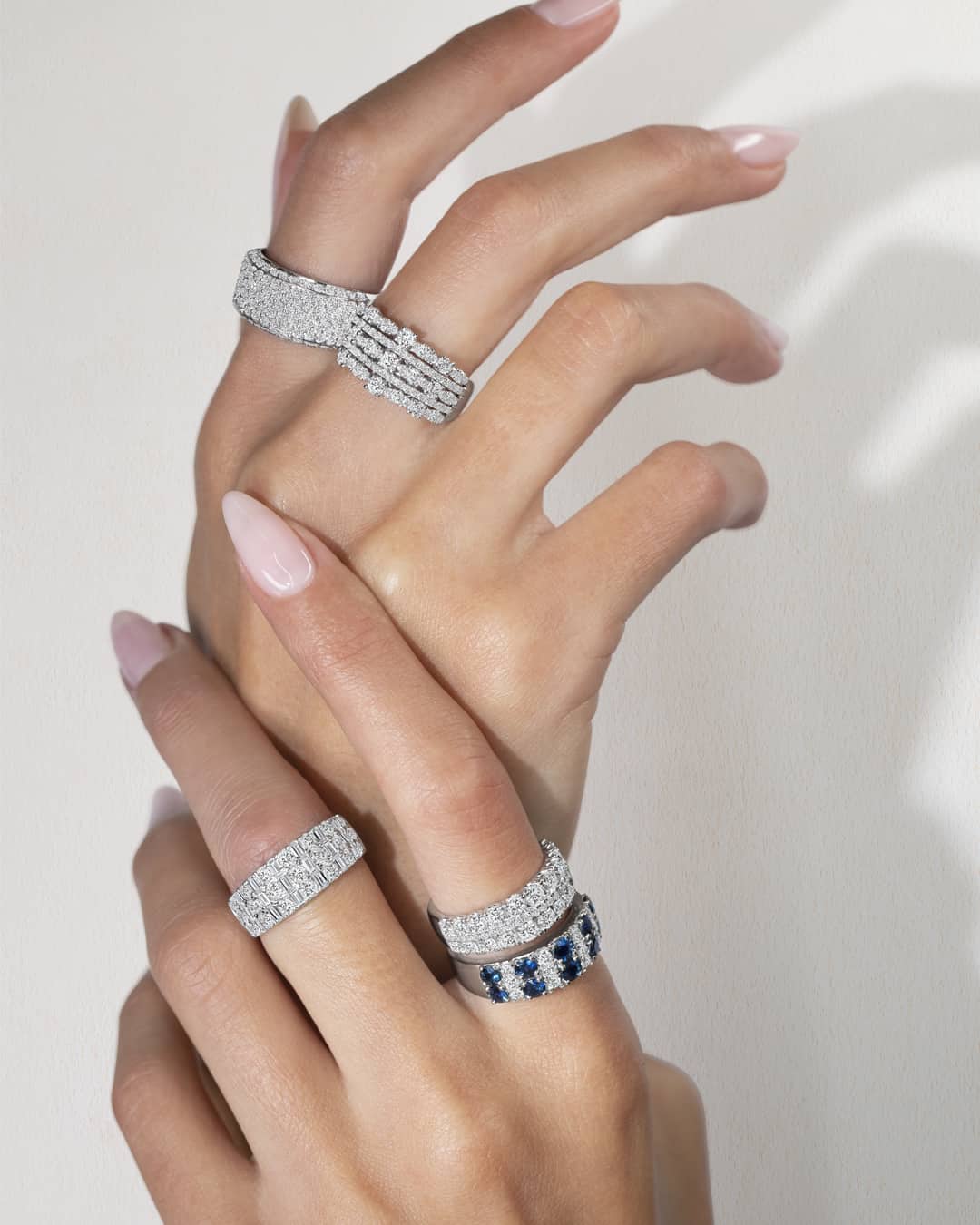
Wide Band Engagement Rings and Wedding Bands For Elegance and Durability
Wide band engagement rings and wedding bands have become an emerging favorite among modern couples. With more surface across the…
read more